
Category: Guides

  • Hypermiling 101: How to Drive to Squeeze Every Last Mile Out of Your Tank

    Hypermiling 101: How to Drive to Squeeze Every Last Mile Out of Your Tank

    Introduction

    With petrol prices continuing to fluctuate and the cost of living showing no signs of easing, British motorists are feeling the pinch at the pumps more than ever. While shopping around for the cheapest fuel using tools like CheckFuelPrices.co.uk is essential, there’s another powerful weapon in your arsenal: hypermiling.

    Hypermiling is the art and science of maximizing your vehicle’s fuel economy through strategic driving techniques and vehicle preparation. It’s not about driving dangerously slow or creating traffic hazards—it’s about understanding how your car uses fuel and making intelligent adjustments to reduce consumption. The results speak for themselves: dedicated hypermilers regularly achieve 20-30% improvements in fuel economy, with some extreme practitioners doubling their manufacturer’s stated MPG figures.

    In this comprehensive guide, you’ll discover practical, safe techniques that can immediately improve your fuel efficiency, from simple pre-drive checks to advanced driving methods. Whether you’re a fleet manager looking to reduce operating costs, an eco-conscious driver wanting to minimize your carbon footprint, or simply someone trying to make your wages stretch further, these strategies will help you keep more money in your pocket.

    Understanding Fuel Consumption Basics

    Before diving into specific techniques, it’s crucial to understand how your vehicle actually uses fuel. Internal combustion engines are remarkably inefficient machines—converting only about 20-30% of the energy in petrol into actual motion, with the rest lost as heat. However, they operate most efficiently within specific parameters.

    Engine efficiency sweet spots typically occur between 1,500-2,500 RPM for most petrol engines, and slightly lower for diesels. Running outside this range—whether constantly revving high or lugging the engine at very low RPM—wastes fuel. Modern engines with variable valve timing and turbochargers have broadened these efficient ranges, but the principle remains: moderate engine speeds generally mean better fuel economy.

    Aerodynamics plays an increasingly significant role as speed increases. Air resistance rises exponentially with speed—doubling your speed actually quadruples the aerodynamic drag. This is why motorway driving above 70mph sees fuel economy plummet. Even small changes matter: roof boxes, bike racks, and even open windows create drag that forces your engine to work harder.

    Weight and rolling resistance also significantly impact consumption. Every 50kg of extra weight in your vehicle can reduce fuel economy by approximately 2%. Meanwhile, underinflated tyres increase rolling resistance, forcing the engine to work harder to maintain speed. The condition of your tyres, wheel alignment, and even the type of tarmac you’re driving on all contribute to how much energy is required to keep your car moving.

    Understanding these fundamentals helps you appreciate why the techniques that follow actually work—and why some commonly held beliefs about fuel economy are myths.

    Pre-Drive Preparation

    Hypermiling begins before you even start the engine. These preparation steps take minimal time but can deliver consistent improvements to your fuel economy.

    Tyre pressure optimization is perhaps the single easiest improvement you can make. Underinflated tyres create excessive rolling resistance and can reduce fuel economy by 3% or more. Check your handbook or the sticker inside the driver’s door jamb for the recommended pressures—and check them monthly when tyres are cold. Some hypermilers inflate to the upper end of the recommended range or even slightly beyond (though never exceed the tyre’s maximum pressure rating stamped on the sidewall). During winter months, remember that tyre pressure drops approximately 1 PSI for every 10°C decrease in temperature.

    Remove unnecessary weight from your vehicle systematically. That bag of sports equipment in the boot, the roof box you haven’t used since last summer’s holiday, the spare set of tools—all contribute to extra fuel consumption. A thorough clearout can easily remove 30-50kg from the average family car. However, don’t remove safety equipment like your spare tyre, warning triangle, or first aid kit. The weight savings aren’t worth the risk.

    Route planning deserves more attention than most drivers give it. Modern sat-nav systems and apps like Google Maps can show you alternative routes and real-time traffic conditions. A slightly longer route that avoids stop-start traffic can actually use less fuel than a shorter congested route. Hills are particularly costly for fuel economy—the energy required to climb is never fully recovered when descending. Where practical, choose flatter routes, especially when carrying heavy loads.

    Fuel quality and filling strategy also matters. Premium fuels often contain detergents that can help maintain engine efficiency, though the higher cost rarely justifies the marginal improvement for most vehicles. Fill up during cooler parts of the day (early morning or evening) when fuel is denser, giving you slightly more energy per litre. More importantly, use a fuel price checker like CheckFuelPrices.co.uk to find the cheapest stations near your route—saving 5-10p per litre makes a far bigger difference than any driving technique. Don’t drive miles out of your way for cheap fuel, but if there’s a budget station on your regular route, it’s worth using.

    Driving Techniques That Work

    The way you operate your vehicle has the most dramatic impact on fuel consumption. These proven techniques can transform your MPG figures without significantly increasing journey times.

    Smooth acceleration is fundamental to fuel-efficient driving. Imagine there’s an egg between your foot and the accelerator pedal—you want to press firmly enough to make progress but gently enough not to crack the egg. Harsh acceleration dumps extra fuel into the cylinders and operates the engine outside its efficient range. Instead, accelerate gently and progressively, aiming to reach your desired speed using the highest gear possible in the shortest time. For most cars, this means shifting up before 2,000 RPM for diesels and 2,500 RPM for petrol engines.

    Modern automatic gearboxes often have “Eco” modes that alter shift patterns and throttle response to encourage this behavior. Use these modes for general driving, switching to “Sport” only when you genuinely need the extra performance.

    Maintaining momentum is perhaps the most important skill in hypermiling. Your car’s kinetic energy represents fuel already burned—every time you brake, you’re converting that expensive fuel into waste heat. Read the road ahead constantly, looking 10-15 seconds forward. Spotting a red light early allows you to lift off the accelerator and coast toward it, potentially arriving just as it turns green without ever fully stopping. This technique alone can improve urban fuel economy by 10-15%.

    Watch for other clues: brake lights ahead suggest slowing traffic, pedestrians waiting at crossings might step out, roundabouts require reduced speed. Anticipating these situations allows you to scrub off speed gradually using engine braking rather than your brake pedal.

    Coasting techniques must be understood properly to be effective. Modern fuel-injected engines actually use zero fuel when you lift off the accelerator while in gear—the momentum of the car keeps the engine spinning. This is called “deceleration fuel cut-off” (DFCO). However, if you drop into neutral or depress the clutch, the engine must use fuel to keep itself running at idle.

    The key is understanding when to stay in gear and when to coast in neutral. Stay in gear when approaching situations where you’ll need to slow down significantly (roundabouts, red lights, tight corners). Switch to neutral or clutch-down coasting when maintaining or slowly reducing speed on gentle downhills or when approaching situations where you’ll need minimal braking.

    Optimal cruising speeds on motorways typically fall between 55-65mph for maximum fuel efficiency. At 70mph, most cars are working significantly harder against aerodynamic drag than at 60mph. Dropping from 70mph to 60mph can improve motorway fuel economy by 10-15%, though this needs balancing against journey time considerations. On longer trips, leaving 10-15 minutes earlier and cruising at 60mph in the inside lane often uses dramatically less fuel with minimal time penalty.

    Cruise control is excellent for maintaining steady speeds on flat motorways, preventing the unconscious speed creep that wastes fuel. However, on hilly terrain, cruise control can be counterproductive. It will downshift and add power to maintain speed uphill, then brake or waste momentum downhill. In hilly conditions, manually controlling speed—allowing it to drop slightly uphill and increase slightly downhill—uses less fuel overall.

    Air conditioning versus open windows is a genuine trade-off with no perfect answer. Air conditioning can increase fuel consumption by 10-15%, particularly in stop-start traffic. However, at motorway speeds, open windows create significant aerodynamic drag that can cost even more fuel than running the air-con. The general rule: below 40-50mph, open windows are more efficient; above this speed, air conditioning becomes the better choice. In mild weather, neither is necessary—use the fan with outside air instead.

    Advanced Hypermiling Methods

    Once you’ve mastered the basics, these advanced techniques can extract even more efficiency from your vehicle. Some require practice and careful judgment to execute safely.

    Pulse and glide technique is the most effective advanced method for maximizing fuel economy. Rather than maintaining constant speed, you gently accelerate (pulse) to 5-10mph above your target speed, then lift off and coast in gear (glide) as speed drops back down. This takes advantage of engine efficiency at moderate loads while minimizing time spent maintaining constant speed. On modern cars with instant consumption displays, you’ll see consumption drop to zero during the glide phase. This technique works best on quiet roads where varying speed won’t frustrate other drivers. The challenge is executing it smoothly enough that passengers barely notice.

    Drafting behind larger vehicles reduces aerodynamic resistance, potentially improving motorway fuel economy by 10-20%. However, this must be done responsibly and legally. Maintaining a safe following distance (the two-second rule minimum) is non-negotiable—fuel savings mean nothing if you cause an accident. Never draft closer than you would normally follow, and increase distance in wet or foggy conditions. Lorries create the best drafting effect, but even following a large SUV at normal following distances provides some benefit.

    Efficient cornering means taking the racing line in reverse—using the full width of your lane to minimize steering angle, which reduces the scrubbing of tyres and maintains momentum more effectively. This only applies where it’s safe and legal to do so. On narrow country roads, prioritize safety and visibility over efficiency. The fuel saved isn’t worth the risk of a head-on collision.

    Understanding your instant MPG display transforms these techniques from theoretical to practical. Modern cars show real-time fuel consumption, allowing you to experiment and immediately see results. Spend time watching how different techniques affect the display—you’ll quickly learn what works for your specific vehicle. Some cars show MPG, others show litres per 100km—both are useful once you understand them. Pay attention to your average consumption over full tanks rather than obsessing over instant readings, which can fluctuate wildly.

    What NOT to Do

    The hypermiling community has developed a reputation for extreme measures that cross the line from efficient to dangerous. These practices should be avoided entirely.

    Never turn your engine off while moving. Some extreme hypermilers do this while coasting downhill, but it’s genuinely dangerous. You’ll lose power steering and power brakes, making the vehicle difficult to control in emergencies. Modern cars may also lock the steering column when the engine stops. The fuel savings are minimal and absolutely not worth the safety risk. Similarly, never shift into neutral on steep downhills—you need engine braking for control.

    Avoid extreme drafting where you’re following closer than normal safe distances just to save fuel. Professional hypermiling competitions explicitly ban this practice because it endangers everyone on the road. The fuel saved is negligible compared to the accident risk, and you’ll be liable for any collision that results from tailgating.

    Don’t drive significantly below the speed limit to save fuel if it creates hazardous conditions or excessive congestion. Traveling at 40mph on a 60mph road might improve your MPG figures, but it frustrates other drivers, encourages dangerous overtaking, and makes you a rolling obstruction. Hypermiling should never compromise safety or create traffic hazards.

    Legal considerations vary by jurisdiction, but excessively slow driving can result in penalties for obstructing traffic. Additionally, any technique that reduces your ability to respond to hazards—like coasting in neutral around blind corners—could leave you liable in the event of an accident. Your insurance might also be invalidated if you’re deemed to be driving without due care and attention.

    The golden rule: if a technique feels unsafe or makes you uncomfortable, don’t do it. No amount of fuel savings justifies putting yourself or others at risk.

    Real-World Results and Tracking

    Understanding what’s realistic helps maintain motivation without creating unrealistic expectations. Results vary significantly based on vehicle type, typical journey profile, and how consistently you apply these techniques.

    Small petrol cars (like a Ford Fiesta or Volkswagen Polo) often see the most dramatic percentage improvements because they’re already fairly efficient. Achieving 20-25% above the manufacturer’s claimed combined MPG is realistic with disciplined hypermiling. Modern hybrids can exceed their official figures even more significantly because the techniques naturally optimize electric motor usage.

    Larger vehicles and SUVs have more room for improvement in absolute terms but face physical limitations. A Range Rover won’t achieve Fiesta-level economy regardless of technique, but improving from 25 MPG to 32 MPG represents significant real-world savings.

    Diesel vs petrol engines respond slightly differently. Diesels generally benefit more from maintaining momentum and avoiding unnecessary acceleration because they’re more efficient at partial loads. Petrol engines benefit more from staying in the 1,500-2,500 RPM range.

    Measuring your improvement requires systematic tracking. Fill your tank completely, zero your trip odometer, drive normally for one tank, then fill up again noting the litres required. Divide miles driven by litres used (then multiply by 4.546 to get MPG if working in litres). Do this for 3-4 tanks to establish a baseline, then implement hypermiling techniques and track another 3-4 tanks to measure improvement.

    Apps and tools make this easier. Fuelly and Fuelio are dedicated fuel tracking apps that graph your consumption over time. Many modern vehicles have built-in trip computers that calculate average consumption, though these can be optimistic by 5-10%. For the ultimate combination of savings, use CheckFuelPrices.co.uk to locate the cheapest fuel stations before filling up—combining efficient driving with paying less per litre multiplies your savings dramatically.

    The fuel price checker at CheckFuelPrices.co.uk is particularly valuable because it shows real-time prices across the UK, helping you avoid expensive motorway services and find budget supermarket stations. When you’re improving your MPG by 20% through hypermiling and also paying 8p per litre less through smart fuel purchasing, the combined effect can reduce your monthly fuel bill by 30% or more.

    Wrapping up

    Hypermiling isn’t about transforming every journey into an obsessive fuel-saving exercise. It’s about understanding how your vehicle uses energy and making intelligent choices that reduce waste. The easiest wins—proper tyre pressure, removing excess weight, smooth acceleration, and maintaining momentum—require minimal effort but deliver consistent results.

    Start with the simple techniques and build up as they become habitual. You’ll find that many hypermiling practices actually make you a safer, more aware driver because they require reading the road ahead and anticipating hazards. The fuel savings are real: most drivers can realistically achieve 15-20% improvements without extreme measures or significant journey time increases.

    Remember to maximize your savings by combining efficient driving with smart fuel purchasing. Visit CheckFuelPrices.co.uk to find the cheapest petrol and diesel prices near you—because paying less per litre and using fewer litres creates compound savings that make every journey more affordable.
  • Supermarket vs Brand: Does Shell Really Give You More Miles Than Asda Fuel?

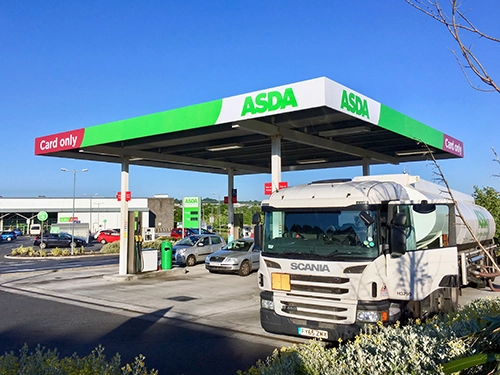
    Supermarket vs Brand: Does Shell Really Give You More Miles Than Asda Fuel?

    Walk into any pub, workplace canteen, or internet forum, and you’ll find passionate advocates on both sides of the supermarket versus branded fuel debate. “Shell’s petrol keeps your engine cleaner and gives better MPG,” insist some drivers, while others counter with “it all comes from the same refineries—you’re just paying for the logo.” The price difference fuels the controversy: branded fuel typically costs 3-8p per litre more than supermarket alternatives, translating to £3-£8 extra per tank or £150-£400 annually for regular drivers.

    With household budgets under pressure and fuel prices volatile, the question matters: does that premium actually buy you anything beyond marketing? Or are budget-conscious motorists genuinely compromising their vehicles by choosing Asda over Shell?

    This article cuts through the marketing claims and internet mythology with scientific evidence, independent testing, economic analysis, and expert testimony. You’ll discover what actually differs between fuels, whether those differences materially affect your vehicle or wallet, and crucially—when premium fuel makes sense and when it’s money down the drain.

    What’s Actually Different?

    The inconvenient truth that both fuel brands and supermarkets would rather you didn’t focus on: all standard unleaded petrol sold in the UK must meet identical British and European specifications. Whether you fill up at Shell, BP, Tesco, or Asda, the fuel must comply with BS EN 228 standard, which defines strict parameters for everything from octane rating to sulfur content, volatility, and composition.

    This means the fundamental fuel—the hydrocarbons that actually combust in your engine—is essentially identical across all retailers. It’s refined to the same specifications, contains the same octane rating (95 RON for standard unleaded), and delivers the same energy content per litre. The base product leaving refineries is, for practical purposes, indistinguishable.

    Where differences emerge is in the additive packages blended into fuel at the point of distribution. After base fuel leaves the refinery, it travels to distribution terminals where each retailer adds their proprietary additive package. These additives include:

    • Detergents: Designed to clean fuel injectors and intake valves, preventing deposit buildup
    • Corrosion inhibitors: Protect fuel system components from oxidation and rust
    • Anti-icing agents: Prevent water in fuel from freezing in cold weather
    • Friction modifiers: Claimed to reduce engine friction (though fuel rarely contacts moving metal surfaces directly)
    • Combustion improvers: Marketing claims suggest enhanced burn efficiency
    • Stabilizers: Slow fuel degradation during storage

    Branded retailers—Shell, BP, Esso, Texaco—claim their additive packages are superior, more concentrated, or more advanced than supermarket alternatives. Supermarkets counter that their additives meet all requirements and provide adequate protection for modern engines.

    Premium fuels (Shell V-Power, BP Ultimate, Tesco Momentum) represent a different proposition entirely. These feature:

    • Higher octane ratings (typically 97-99 RON versus 95 RON standard)
    • Enhanced additive packages with higher concentrations
    • Marketing claims of engine cleaning, performance improvements, and efficiency gains
    • Significantly higher prices (10-15p per litre premium)

    The supply chain reality complicates the brand loyalty argument. The UK operates a shared distribution infrastructure—fuel from BP, Shell, ExxonMobil, and other refineries gets pooled at regional terminals, then distributed to retailers. Your “Shell” petrol might originate from an Esso refinery, while Tesco’s fuel could come from Shell’s refinery. The only differentiation occurs when proprietary additives are blended in at the terminal immediately before delivery to individual stations.

    This shared infrastructure means the base fuel quality is virtually identical—it’s the final additive blend that creates any meaningful difference. The question becomes: are branded additive packages sufficiently better to justify the premium?

    The Science of Fuel Additives

    Understanding what additives actually do—versus what marketing claims they do—is essential for evaluating whether premium pricing delivers value.

    Detergent additives are the most important component affecting long-term engine health. Modern fuel injection systems operate at extremely high pressures with microscopic tolerances. Deposits accumulating on injector tips can disrupt spray patterns, reducing efficiency and increasing emissions. Intake valve deposits (particularly in port-injected engines) restrict airflow and affect combustion quality.

    Quality detergent additives demonstrably reduce these deposits. Independent testing by organizations like the American Automobile Association (AAA) shows that fuels meeting “Top Tier” detergent standards—including Shell, BP, Esso, and surprisingly, some supermarket fuels—maintain significantly cleaner injectors than minimum-specification fuels. The difference isn’t academic: severely contaminated injectors can reduce fuel economy by 2-4% and increase emissions substantially.

    However, the critical question is whether branded standard fuels provide meaningfully better detergency than supermarket standard fuels. All UK fuels must meet minimum detergent requirements under BS EN 228. Branded retailers claim their packages exceed minimums, but supermarkets argue their formulations adequately protect modern engines. Independent verification of these competing claims is limited because additive formulations are proprietary trade secrets.

    Friction modifiers feature prominently in premium fuel marketing but face skepticism from engineers. Fuel passes through the combustion chamber where it burns—it doesn’t directly contact most engine components except briefly within the combustion chamber and exhaust. The primary lubrication for pistons, bearings, and valves comes from engine oil, not fuel. Some engineers dismiss friction modifier claims as marketing theater, while others acknowledge potential marginal benefits to fuel pump longevity and upper cylinder lubrication.

    Anti-corrosion additives protect fuel system components from oxidation, particularly important for vehicles stored for extended periods or those operating in humid environments. All fuels contain these additives; the question is concentration and effectiveness. Anecdotal evidence suggests branded fuels may offer slightly better protection for infrequently used vehicles, but controlled testing is scarce.

    Octane ratings deserve special attention because they’re measurable, significant, and often misunderstood. Standard unleaded is 95 RON (Research Octane Number); premium fuels are typically 97-99 RON. Higher octane fuel resists pre-ignition (knocking) under compression, allowing engines designed for premium fuel to run more aggressive timing and boost pressures.

    For engines designed for 95 RON fuel, using 97-99 RON provides no benefit. Modern engine management systems cannot dynamically adjust to take advantage of higher octane—they’re calibrated for the specified fuel grade. Marketing claims that premium fuel delivers power or efficiency gains in standard engines are largely misleading unless the engine specifically requires or recommends higher octane.

    Independent testing provides the most credible evidence. The German automobile club ADAC conducted extensive testing comparing branded and supermarket fuels across multiple vehicles and found:

    • Detergent effectiveness varied between fuel brands but didn’t consistently favor branded over supermarket
    • Premium fuels (higher octane) provided no economy or performance benefits in vehicles designed for 95 RON
    • Long-term deposit accumulation showed minimal differences between quality supermarket fuels and branded alternatives
    • The primary variable was whether fuels met enhanced detergent standards (like Top Tier), not whether they were branded or supermarket

    The UK’s AA and Which? consumer organization reached similar conclusions: fuel quality differences between major retailers are marginal for modern vehicles in normal use.

    Real-World MPG Testing

    Laboratory testing reveals chemical composition, but the question most drivers care about is simpler: “Do I get more miles per tank from Shell than Asda?” Real-world evidence provides illuminating but nuanced answers.

    Independent testing organizations have conducted back-to-back comparisons with mixed results. Auto Express ran a comprehensive test using identical vehicles, routes, and driving styles, comparing supermarket versus branded standard fuel. Their finding: fuel economy differences fell within the margin of measurement error (typically ±2%), making it impossible to definitively attribute any variation to fuel brand rather than ambient conditions, traffic patterns, or other variables.

    What Car? magazine conducted similar testing and found marginally better economy with premium fuels (Shell V-Power, BP Ultimate) versus standard fuels—around 1.5-2% improvement. However, this compared premium to standard, not branded standard to supermarket standard. When comparing like-for-like (standard unleaded across brands), differences were statistically insignificant.

    Manufacturer recommendations are revealing in their consistency: virtually every mainstream manufacturer specifies 95 RON unleaded for their standard vehicles and notes that any fuel meeting UK/EU specifications is acceptable. They explicitly don’t require branded fuel. Even premium manufacturers like BMW, Mercedes, and Audi specify 95 RON as standard (98 RON for some high-performance variants) but don’t mandate specific brands.

    If Shell or BP fuel delivered meaningfully superior performance or longevity, manufacturers would specify it to protect warranty claims and brand reputation. They don’t—suggesting engineering teams see no material difference.

    User-reported differences from forums and surveys show enormous variance, which itself is instructive. Drivers report everything from “5 MPG improvement with Shell!” to “no difference whatsoever” to “better with supermarket fuel.” This wild variation strongly suggests confirmation bias and placebo effect rather than genuine fuel differences.

    The psychological phenomenon is well-documented: if you pay 5p per litre extra, you’re primed to perceive better performance. Drivers who’ve convinced themselves premium fuel is superior unconsciously adopt slightly more conservative driving styles, attribute good fuel economy tanks to the premium fuel while dismissing poor tanks as anomalies, and notice improvements that don’t exist in controlled conditions.

    Statistical analysis of crowdsourced fuel economy data from apps like Fuelly and Spritmonitor (which aggregate millions of fill-ups) shows no consistent brand-based patterns. When controlling for vehicle model, engine type, and driving conditions, fuel brand explains virtually zero variance in reported fuel economy. What does matter enormously:

    • Driving style: Aggressive acceleration and braking can reduce economy by 20-30%
    • Speed: Motorway driving at 80mph versus 65mph costs 15-20% economy
    • Vehicle maintenance: Underinflated tires, worn spark plugs, dirty air filters (3-10% impact)
    • Journey type: Cold starts and short trips devastate efficiency versus long, warm journeys
    • Weather and temperature: Winter fuel economy is typically 10-15% worse than summer
    • Vehicle load and roof racks: Significant aerodynamic and weight impacts

    The inconvenient reality: your right foot affects fuel economy 10-20 times more than your fuel brand choice. A driver achieving 38 MPG with Asda fuel and conservative driving would likely achieve 36-37 MPG with the same aggressive driving using Shell—a difference attributable to behavior, not fuel.

    Variables that confound personal testing make definitive self-experimentation nearly impossible:

    • Ambient temperature fluctuations of 5-10°C between tanks change economy
    • Traffic conditions vary tank-to-tank
    • Brim-to-brim measurement errors (fuel pumps automatically cut off at slightly different points)
    • Unconscious driving behavior changes when “testing”
    • Fuel gauge and trip computer inaccuracies (often optimistic by 5-10%)

    For an individual to definitively prove fuel brand affects their economy would require controlled conditions impossible to achieve in normal driving: identical routes, speeds, temperatures, traffic conditions, and repeated testing over dozens of tanks. Even then, the expected difference (if any) likely falls within measurement noise.

    The placebo effect in fuel economy is powerful and documented. Studies where participants were told they’d received premium fuel (but actually received standard) reported improved performance and economy—despite receiving identical fuel to control groups. The expectation creates the perception.

    The Economic Reality Check

    Even if branded fuel delivered marginal improvements, does the mathematics support paying the premium? Let’s examine realistic scenarios with actual numbers.

    Base scenario assumptions:

    • Annual mileage: 10,000 miles
    • Fuel economy: 40 MPG
    • Annual consumption: 250 gallons (1,136 litres)
    • Supermarket fuel price: £1.35/litre
    • Branded fuel premium: +£0.05/litre (conservative estimate)

    Annual cost difference: £57

    Now let’s consider claimed improvements. Branded fuel marketing suggests “up to 2% better economy” (taking the optimistic upper end of any credible claims):

    Improvement from branded fuel:

    • 2% improvement on 40 MPG = 40.8 MPG
    • New annual consumption: 245 gallons (1,114 litres)
    • Litres saved: 22 litres

    Value of fuel saved at £1.35/litre: £30

    Net cost of using branded fuel: £57 – £30 = £27 extra annually

    This breaks even only if branded fuel delivers 4.2% better economy—more than double even optimistic marketing claims and well beyond any credible independent testing results.

    The mathematics becomes more brutal at realistic improvement levels. If branded fuel delivers the 0-1% improvement suggested by controlled testing:

    • 1% improvement = save 11 litres annually = £15 value
    • Net cost: £57 – £15 = £42 extra annually for negligible benefit

    For premium fuels (Shell V-Power, BP Ultimate), the economics are even worse for vehicles designed for 95 RON:

    • Premium typically costs 10-15p more per litre
    • Annual extra cost: £114-£170
    • Would require 8-12% improvement to break even
    • Actual improvement in vehicles not requiring premium: 0-2%

    When branded/premium fuel makes financial sense:

    1. Never, for standard vehicles in normal use, from a pure economy perspective
    2. Potentially, for vehicles explicitly requiring 98 RON (some performance models)
    3. Arguably, for valuable classics or infrequently used vehicles where enhanced additives might provide better long-term protection
    4. Possibly, if you drive a high-performance vehicle on track days where premium fuel’s knock resistance enables full performance

    The CheckFuelPrices.co.uk advantage completely changes the calculation. Rather than paying a 5p premium for branded fuel, use CheckFuelPrices.co.uk to find the cheapest fuel—often supermarket stations undercut branded forecourts by 5-8p per litre. For our example driver:

    • Finding fuel 7p cheaper via price comparison
    • Annual saving: £80
    • This dwarfs any theoretical efficiency gain from branded fuel

    The cold mathematics: paying attention to price per litre saves far more than paying attention to brand. A driver obsessing over Shell versus Asda while ignoring a 6p price variation at different stations is optimizing the wrong variable.

    Special Cases Where Brand Might Matter

    While branded fuel rarely justifies its premium for typical drivers, specific scenarios exist where fuel choice genuinely affects performance, longevity, or reliability.

    High-performance vehicles with manufacturer recommendations represent the clearest case. Some vehicles explicitly require or recommend 98+ RON fuel:

    • Porsche 911 Turbo models
    • BMW M-series variants
    • Mercedes-AMG models
    • Some Ford Focus ST and RS models
    • Various other performance-oriented vehicles

    For these vehicles, premium fuel isn’t optional marketing—it’s engineering necessity. Their engine management systems are calibrated assuming higher octane, enabling aggressive ignition timing and boost pressure. Using 95 RON fuel forces the ECU into knock-protection mode, retarding timing and reducing performance/efficiency. Here, premium fuel delivers the promised benefits because the engine is designed to exploit it.

    Very old vehicles with carburetor systems may genuinely benefit from enhanced additive packages. Modern fuel injection systems are sophisticated and robust; 1970s-1990s carburetors with their narrow jets and passages are more vulnerable to varnish deposits and blockages. Some classic car specialists recommend branded or premium fuels for better detergency and storage stability, though equally effective solutions include fuel additives designed for classic cars or simply running the engine regularly.

    Infrequently used vehicles face fuel degradation issues where enhanced additives might help. Petrol begins deteriorating within weeks—particularly E10 with its hygroscopic ethanol content. Vehicles started monthly or less (classic cars, seasonal vehicles, backup cars) suffer from:

    • Fuel oxidation and varnish formation
    • Phase separation in ethanol-blended fuels
    • Condensation and water accumulation in tanks

    Premium fuels often include enhanced stabilizers and may degrade slightly slower. However, purpose-designed fuel stabilizers added to any fuel provide superior protection at lower cost than exclusively using premium fuel.

    Extreme cold weather performance occasionally favors branded fuels. All UK petrol includes anti-icing additives, but winter-grade fuels from major brands may include enhanced packages. In practice, this rarely matters for vehicles in regular use—diesel gelling is a genuine cold-weather concern; petrol freezing issues are exceptionally rare in UK conditions.

    Motorsport and track day use represents perhaps the most legitimate case for premium fuel. Track driving involves sustained high-load operation where:

    • Engines operate at high RPM for extended periods
    • Turbochargers generate maximum boost
    • Knock margin becomes critical for reliability
    • Fuel cooling properties matter

    Here, shell V-Power, BP Ultimate, or dedicated racing fuels (99+ RON) deliver measurable advantages. However, this represents perhaps 0.1% of UK driving and doesn’t justify premium fuel for the commute home from the track.

    Modern direct-injection engines and carbon buildup have generated controversy. Direct injection sprays fuel directly into combustion chambers, meaning it never washes over intake valves. In port-injection engines, fuel detergents clean intake valves continuously; in direct-injection engines, valves accumulate carbon deposits over time regardless of fuel quality. Some manufacturers and specialists recommend periodic “Italian tuning” (high-RPM operation) or intake cleaning services. Fuel brand affects this marginally at most—the phenomenon stems from engine design, not fuel choice.

    The honest assessment: for 95%+ of drivers, these special cases don’t apply. If your vehicle’s handbook specifies 95 RON unleaded and you drive normally in typical UK conditions, branded fuel provides no meaningful advantage.

    Expert Opinions

    Cutting through marketing requires consulting people who work with engines daily and have no commercial stake in fuel brand loyalty.

    Independent mechanics with decades of experience offer remarkably consistent perspectives. Speaking to technicians at several UK independent garages revealed a common theme: “We see no pattern of fuel-related issues correlating with supermarket versus branded fuel use.” Mechanics report fuel system problems from contaminated fuel (rare), water ingress, and neglected maintenance—but not systematic differences between vehicles using Asda versus Shell.

    One experienced technician noted: “I’ve worked on vehicles with 150,000+ miles using exclusively supermarket fuel with perfectly clean fuel systems, and I’ve seen similar mileage vehicles using premium branded fuel with deposit issues. It comes down to maintenance, driving patterns, and vehicle design—not fuel brand.”

    Automotive engineers from both manufacturers and independent consultancies emphasize that modern engines are designed for 95 RON fuel meeting BS EN 228 specifications—period. If fuel meets standards, it’s suitable. One powertrain engineer from a major manufacturer stated bluntly: “Our warranty covers any fuel meeting UK specifications. If branded fuel was necessary for reliability, we’d mandate it. We don’t because it isn’t.”

    Engineers acknowledge that additive packages differ but emphasize modern fuel injection systems are remarkably tolerant. Electronic control units compensate for fuel variations through adaptive learning, oxygen sensor feedback, and knock sensors. Marginal additive differences don’t meaningfully affect well-maintained vehicles.

    Fuel industry insiders provide the most cynical perspective. Several individuals who’ve worked in refining and distribution (speaking off-record) confirmed what the supply chain suggests: base fuel is largely identical, additives create differentiation, but the quality gap between reputable supermarkets and branded forecourts is minimal. One former distribution manager noted: “The additives cost pence per thousand litres. The price premium you pay is mostly marketing and brand positioning, not additive quality.”

    They also confirmed that supply disruptions occasionally mean fuel destined for one brand gets delivered to competitors—your “premium” branded fill-up might be identical to the supermarket fuel you avoided, depending on supply logistics.

    Consumer advocacy groups like Which? and the AA have consistently tested and evaluated fuels. Their findings uniformly show:

    • All major retailers (supermarket and branded) provide fuel suitable for modern vehicles
    • Premium fuels don’t deliver economy improvements justifying their cost for standard vehicles
    • Long-term reliability shows no consistent brand-related patterns
    • The best fuel is clean, correctly specified (95 or 98 RON as required), and competitively priced

    The AA’s technical experts note that fuel contamination incidents—where genuinely defective fuel causes widespread problems—have affected both branded and supermarket stations over the years. Quality control failures are rare industry-wide, not concentrated in budget providers.

    Academic research on fuel additives is limited because formulations are proprietary and funding often comes from interested parties. Independent studies that do exist (primarily from organizations like SAE International and European automotive research institutes) confirm that detergent additives meeting enhanced standards (like Top Tier) maintain cleaner engines than minimal-specification fuels—but these enhanced standards are met by some supermarket fuels as well as branded alternatives.

    The expert consensus is unambiguous: for typical vehicles in normal use, fuel brand doesn’t materially affect reliability, performance, or economy provided it meets specifications. The obsession over brand loyalty is misplaced energy that would be better directed toward proper maintenance, careful driving, and price comparison.

    The Verdict

    After examining specifications, testing, economics, and expert opinion, the answer to “Does Shell really give you more miles than Asda fuel?” is definitively: No—not in any meaningful, cost-effective way for typical drivers and vehicles.

    The straight facts:

    1. Base fuel is essentially identical across all UK retailers—it must meet the same specifications and often originates from shared refineries
    2. Additive packages differ marginally but all major retailers (including reputable supermarkets) provide adequate protection for modern engines
    3. Independent testing shows no consistent economy or performance advantages for branded standard fuel over supermarket standard fuel
    4. Premium fuels (higher octane) provide no benefits for vehicles designed for 95 RON, making them poor value for most drivers
    5. The economics don’t support branded fuel even accepting optimistic efficiency claims—price per litre matters far more than brand logo
    6. Expert consensus from mechanics, engineers, and consumer advocates confirms fuel brand doesn’t meaningfully affect reliability for well-maintained modern vehicles

    Best practices for fuel selection:

    For most drivers: Use the cheapest fuel meeting your vehicle’s specification (95 or 98 RON as required) from a reputable retailer. The money saved dwarfs any theoretical additive advantage from branded alternatives.

    For high-performance vehicles requiring 98 RON: Use the specified premium fuel—but shop for price. Shell V-Power and BP Ultimate are functionally equivalent; buy whichever is cheaper.

    For classic cars and infrequently used vehicles: Consider premium fuel for enhanced stabilizers, or add dedicated fuel stabilizer to whatever fuel you choose. Run the engine regularly and keep tanks topped up to minimize degradation.

    For everyone: Driving style affects fuel economy 10-20 times more than fuel brand. Smooth acceleration, maintaining momentum, appropriate speed, and proper vehicle maintenance (tire pressure, servicing, air filters) deliver guaranteed, substantial improvements. Obsessing over fuel brand while ignoring these factors is optimizing trivia while ignoring fundamentals.

    The biggest factors affecting fuel economy (in order of impact):

    1. Driving behavior and style (20-30% variance)
    2. Journey type and conditions (15-25% variance)
    3. Vehicle maintenance (5-15% variance)
    4. Weather and seasonal factors (10-15% variance)
    5. Vehicle load and aerodynamics (5-10% variance)
    6. Fuel brand (0-1% variance at best)

    Notice what’s last on that list.

    Smart Fueling Strategy

    Rather than brand loyalty, adopt a strategic approach to fuel purchasing that maximizes value without compromising vehicle health.

    For standard vehicles (requiring 95 RON):

    1. Use price comparison religiously: Tools like CheckFuelPrices.co.uk show real-time prices across local stations—variations of 5-10p per litre between stations are common
    2. Choose reputable retailers: Stick with major supermarkets (Tesco, Asda, Sainsbury’s, Morrisons) and established branded forecourts—avoid no-name stations of uncertain origin
    3. Buy where convenient at competitive prices: Don’t drive miles out of your way for 2p savings, but if a budget station sits on your regular route, use it
    4. Ignore brand marketing: Shell, BP, Esso standard unleaded provides no material advantage over Tesco, Asda, Sainsbury’s standard unleaded

    For vehicles requiring/recommending 98 RON:

    1. Compare premium fuel prices: Shell V-Power, BP Ultimate, Tesco Momentum, and Esso Supreme+ are functionally equivalent—buy the cheapest
    2. Check CheckFuelPrices.co.uk for premium fuel pricing across stations
    3. Consider whether you actually need it: Some vehicles “recommend” premium without requiring it—consult owner forums and manufacturer documentation

    For classic cars and special cases:

    1. Use E5 super unleaded if E10 compatibility is questionable
    2. Add quality fuel stabilizer for vehicles stored between uses
    3. Consider branded premium if your vehicle genuinely benefits (consult marque specialists)
    4. Run the engine regularly to prevent fuel degradation

    For maximum savings regardless of vehicle:

    1. Fill up at supermarkets on your regular routes: Their fuel is fine; their prices are typically cheapest
    2. Use CheckFuelPrices.co.uk to identify local price outliers—sometimes branded stations run promotions making them cheaper than supermarkets
    3. Join loyalty schemes: Tesco Clubcard points, Nectar points, BP Rewards, and Shell Go+ can offset costs slightly
    4. Fill up mid-week: Prices often rise Thursday/Friday before weekend travel
    5. Avoid motorway services: Typically 10-15p per litre premium for location convenience

    Testing for yourself (if you’re determined):

    1. Establish a baseline: Run 5+ tanks of your regular fuel, recording exact litres, miles, and MPG
    2. Switch fuels: Use 5+ tanks of alternative fuel under similar conditions
    3. Control variables: Same driving routes, similar weather, consistent driving style
    4. Analyze statistically: Compare average MPG accounting for standard deviation—differences under 3% are likely noise

    Most drivers will conclude their time is better spent on price comparison than fuel testing.

    The ultimate truth: You’ll save far more money finding fuel 5p cheaper using CheckFuelPrices.co.uk than you’ll ever gain from obsessing over branded versus supermarket fuel quality. Check prices, buy cheap from reputable retailers, drive smoothly, and maintain your vehicle properly—that’s the smart fueling strategy that actually impacts your bank balance.

    The debate over Shell versus Asda is mostly mythology. The debate over £1.32 versus £1.39 per litre is pure mathematics—and the mathematics doesn’t care about the logo on the pump.

  • Is E10 Damaging? The Truth About the New Standard Petrol and Older Engines

    Is E10 Damaging? The Truth About the New Standard Petrol and Older Engines

    In September 2021, E10 replaced E5 as the standard grade of petrol at UK forecourts, marking the biggest change to pump fuel in decades. The switch sparked immediate concern among owners of older vehicles, with online forums filling with warnings about destroyed fuel systems, corroded components, and catastrophic engine failures. Classic car enthusiasts were particularly alarmed, some claiming the new fuel would render their cherished vehicles undriveable.

    But how much of this anxiety is justified, and how much is exaggeration? The truth, as is often the case, lies somewhere between “completely harmless” and “imminent disaster.” While E10 does present genuine compatibility issues for certain vehicles, understanding the actual risks—and how to mitigate them—is essential for making informed decisions.

    This comprehensive guide cuts through the hysteria to explain what E10 actually is, which vehicles are genuinely affected, what damage can realistically occur, and most importantly, what you should do if you own an incompatible vehicle. Whether you’re driving a 2005 Ford Focus or a pristine 1970s MGB, you’ll find evidence-based answers here.

    What is E10?

    E10 petrol is a blend of 10% bioethanol and 90% conventional unleaded petrol, doubling the ethanol content of the previous E5 standard (5% ethanol, 95% petrol). This might seem like a minor tweak, but that additional 5% bioethanol creates both environmental benefits and compatibility challenges.

    Bioethanol is a renewable fuel produced from plant materials—primarily sugar beet and wheat in Europe, or corn and sugarcane globally. It burns cleaner than pure petrol, producing fewer carbon emissions and reducing the fossil fuel content of every litre sold. The UK government’s switch to E10 was driven by renewable fuel obligations and climate targets. According to the Department for Transport, the change is expected to reduce CO2 emissions by approximately 750,000 tonnes per year—equivalent to removing 350,000 cars from the roads.

    E5 fuel hasn’t disappeared entirely—it’s still available as super unleaded (97+ octane) at most forecourts. This premium grade must meet E5 specifications, making it the fallback option for incompatible vehicles. However, the price difference is significant, typically 10-15p per litre more expensive than standard E10. For motorists who drive 10,000 miles annually in a car averaging 35 MPG, switching from E10 to E5 adds approximately £140-£210 per year to fuel costs.

    Why the government made this mandatory relates to the Renewable Transport Fuel Obligation (RTFO), which requires fuel suppliers to include minimum percentages of renewable content. Increasing ethanol from 5% to 10% was the most straightforward way to meet escalating targets without requiring infrastructure changes (unlike E85, which requires 85% ethanol). The switch also brought the UK in line with many European countries and the United States, where E10 has been standard for years.

    The rollout wasn’t without controversy. The government consulted extensively before implementation, ultimately deciding that the environmental benefits and the availability of E5 as an alternative justified the change despite the impact on older vehicles.

    Which Vehicles Are Affected?

    The government estimates approximately 600,000 vehicles on UK roads are incompatible with E10, though this represents less than 2% of the total fleet. The age of your vehicle is the primary indicator of compatibility, but it’s not the only factor.

    Pre-2011 petrol vehicles face the highest risk. The specific cutoff varies by manufacturer, but generally speaking:

    • Cars manufactured before 2002 have a high likelihood of incompatibility
    • Vehicles from 2002-2011 fall into a grey area—some are compatible, many aren’t
    • Cars built from 2011 onwards are almost universally E10-compatible, as manufacturers began designing for higher ethanol blends

    However, these are generalizations. Some manufacturers embraced ethanol compatibility earlier than others. For example, most Volkswagen Group vehicles from 2000 onwards are E10-compatible, while certain Japanese models from the mid-2000s aren’t.

    Classic cars and specific vulnerable models include virtually all vehicles manufactured before the 1990s, particularly those with carburettors rather than fuel injection. Notable problem vehicles include:

    • Pre-2002 Ford models (particularly Focus, Fiesta, Ka)
    • Early Nissan Micras and Almeras (pre-2002)
    • Mazda MX-5s built before 2002
    • Classic Minis and MG models from any era
    • Most vehicles with carburettors
    • Many vehicles with fuel systems featuring rubber components not designed for ethanol exposure

    The government checker tool at gov.uk/check-vehicle-e10-petrol allows you to enter your vehicle’s registration number and receive definitive compatibility information. This should be your first port of call—it’s based on manufacturer data and is far more reliable than internet speculation. If your vehicle isn’t listed or returns an uncertain result, contact your manufacturer directly or check your owner’s handbook.

    Motorcycles and small engines deserve special mention. Many motorcycles manufactured before 2011 aren’t E10-compatible, including popular models from Honda, Yamaha, and Suzuki. The MCIA (Motorcycle Industry Association) maintains a separate compatibility checker. Garden equipment, lawnmowers, chainsaws, and generators are particularly vulnerable—many small two-stroke and four-stroke engines were never designed for ethanol fuels and can suffer rapid degradation. Always check manufacturer guidance before using E10 in any petrol-powered equipment.

    The Federation of British Historic Vehicle Clubs estimates that around 600,000 classic vehicles in the UK shouldn’t use E10, though many owners are already using super unleaded as a matter of course due to the higher octane rating benefiting older engine designs.

    The Real Risks Explained

    Understanding the actual mechanisms of E10-related damage helps separate genuine concerns from urban myths. The problems stem from ethanol’s chemical properties rather than any defect in the fuel itself.

    Material compatibility issues are the primary concern. Ethanol is a solvent—more aggressive than pure petrol at degrading certain materials. In incompatible vehicles, it attacks:

    • Rubber and plastic fuel lines: Older fuel systems used materials that swell, become brittle, or dissolve when exposed to ethanol. Modern vehicles use ethanol-resistant materials like fluoroelastomers, but pre-2000s vehicles often don’t.
    • Seals and gaskets: Fuel pump seals, injector o-rings, and carburettor gaskets may degrade, leading to leaks or component failures.
    • Fuel tanks: Some older vehicles (particularly classics with composite or fibreglass tanks) can suffer from internal degradation.
    • Carburettor components: The small passages and jets in carburettors are vulnerable to blockage from degraded material particles.

    The timeline for damage isn’t instantaneous. A single tank of E10 in an incompatible vehicle won’t immediately destroy your fuel system. The degradation is cumulative—occurring over weeks, months, or years depending on the severity of material incompatibility. Some vehicles show no issues for the first year before problems develop. Others experience immediate running problems if particularly vulnerable components exist.

    Ethanol’s hygroscopic nature—its tendency to absorb moisture from the air—creates a secondary problem set. Ethanol-blended fuel absorbs water from atmospheric humidity, and once saturated, undergoes phase separation where the ethanol/water mixture separates from the petrol. This separated mixture:

    • Cannot burn properly in engines, causing running issues
    • Accelerates corrosion of metal fuel system components
    • Creates potential for microbial growth in fuel tanks
    • Is particularly problematic in vehicles stored for extended periods

    Fuel degradation in stored vehicles accelerates dramatically with E10. While pure petrol remains usable for months in storage, E10 begins degrading within 3-4 weeks, particularly in non-sealed systems exposed to air. Classic cars used occasionally are especially vulnerable—the fuel in the tank, carburettor, and lines absorbs moisture and degrades between uses, potentially causing starting issues and requiring fuel system cleaning.

    Performance and fuel economy impacts are measurable even in compatible vehicles. Ethanol contains approximately 33% less energy per volume than petrol, meaning E10 delivers slightly less power and economy than E5. Real-world testing shows 1-2% reduction in MPG—barely noticeable in daily driving, but real nonetheless. For a vehicle averaging 40 MPG, this equates to approximately 0.5 MPG reduction. The lower energy density also means marginally reduced performance, though modern engine management systems compensate automatically.

    Engine knocking and running issues can occur in older vehicles with fixed ignition timing. Ethanol has a higher octane rating than pure petrol (about 108-110 RON), which should theoretically reduce knocking. However, if the fuel system is degrading and feeding debris into the combustion chambers, or if phase separation has occurred, rough running, hesitation, and poor starting become issues. Some carburetted engines also run leaner with E10, requiring mixture adjustments.

    Long-term versus short-term exposure matters significantly. Occasional use of E10 in an incompatible vehicle—say, a single emergency fill-up—carries minimal risk. The cumulative nature of material degradation means that continuous use over months is where serious damage occurs. Conversely, a compatible vehicle suffers no degradation regardless of how long E10 is used.

    Scientific Evidence and Real-World Data

    Separating fact from fiction requires examining actual research and documented experiences rather than relying on internet speculation.

    Industry testing has been extensive, particularly in markets where high-ethanol blends have been used for decades. The American Petroleum Institute (API) and automakers have conducted thousands of hours of durability testing with E10 and higher blends. These studies confirm that vehicles designed for ethanol operation experience no increased wear or component failures. However, they also validate that older vehicles with incompatible materials do suffer degradation—particularly rubber fuel lines manufactured before 2000 and certain gasket materials.

    The Federation Internationale de l’Automobile (FIA) commissioned research into E10’s effects on classic vehicles, finding that pre-1990s cars face genuine risks. Their testing showed that carburettor components, fuel pumps with rubber diaphragms, and cork-based gaskets are particularly vulnerable. However, they also noted that many perceived problems were actually pre-existing issues made worse by ethanol exposure rather than E10 causing new damage to perfectly healthy systems.

    Real-world feedback from the continent—where E10 has been standard in countries like France and Germany since the early 2010s—provides valuable long-term data. Classic car clubs report that members who switched to premium E5 fuel experienced no issues, while those who continued using E10 saw increased fuel system maintenance requirements. However, catastrophic failures remained rare—most issues manifested as leaking fuel lines, degraded seals requiring replacement, or carburettor cleaning needs.

    UK mechanics and specialists report a noticeable increase in fuel system work since E10’s introduction, particularly on vehicles from the 2002-2010 era. Common issues include:

    • Fuel pump failures in vehicles with rubber-diaphragm pumps
    • Fuel line weeping or perishing
    • Carburettor flooding from degraded needle valve seals
    • Fuel filter blockages from degraded tank liner material

    However, they also emphasize that many vehicles in the “at-risk” age range use E10 without issues. The problem isn’t universal—it depends on the specific materials used by each manufacturer.

    Insurance implications remain unclear. Most insurers haven’t explicitly addressed E10-related damage in policy documents. In principle, using fuel clearly marked as unsuitable for your vehicle could complicate claims, but there’s no evidence of insurers systematically denying claims for E10-related damage. Classic car insurers generally recommend E5 premium fuel as best practice, aligning with manufacturer guidance for most historic vehicles.

    Warranty considerations for newer used vehicles potentially not E10-compatible are more significant. If you continue using E10 in a vehicle the government checker identifies as incompatible, and fuel system damage results, a manufacturer warranty might not cover repairs. However, given that E10 is the standard pump fuel, proving that damage resulted specifically from E10 rather than age, mileage, or other factors could be challenging.

    The consensus among technical experts is that E10 presents real but manageable risks for incompatible vehicles, not the apocalyptic fuel system destruction initially feared. Appropriate precautions eliminate virtually all problems.

    What to Do if You Have an Incompatible Vehicle

    Discovering your vehicle isn’t E10-compatible doesn’t mean it’s destined for the scrapyard. Several practical solutions exist, each with different cost and complexity implications.

    Switching to super unleaded E5 is the simplest and most reliable solution. All super unleaded in the UK must meet E5 standards (maximum 5% ethanol), making it safe for any vehicle that previously ran on standard unleaded. The downsides are purely financial—you’re paying 10-15p per litre more, adding £140-£210 annually for an average motorist. However, this avoids all compatibility concerns and often provides better performance due to the higher octane rating (97+ RON versus 95 RON for regular unleaded).

    For classic car owners already buying super unleaded for the octane benefits, E10’s introduction changes nothing. For budget-conscious owners of 2005-2010 vehicles, the extra cost stings but remains far cheaper than fuel system repairs or vehicle replacement.

    Finding E5 stations has become easier thanks to fuel price comparison tools. CheckFuelPrices.co.uk shows which stations offer super unleaded and their current prices, helping you locate the most affordable E5 near you. Most major supermarkets and branded stations stock super unleaded, though some smaller independent stations only carry standard grades.

    Fuel additives and treatments marketed as “E10 protection” have flooded the market, claiming to prevent ethanol-related damage. The evidence for their effectiveness is mixed. Quality additives like Millers VSPe Power Plus or Ethomix do contain detergents, corrosion inhibitors, and fuel stabilizers that provide some protection—particularly for stored vehicles. However, they cannot prevent mechanical degradation of fundamentally incompatible materials. Think of them as risk-reduction measures rather than complete solutions.

    For classic cars stored between uses, fuel stabilizers containing ethanol-specific additives genuinely help prevent phase separation and fuel degradation. Products specifically formulated for ethanol fuels (rather than generic fuel stabilizers) are worth using if you must store E10 in the tank.

    Classic car storage considerations require special attention. Best practices include:

    • Drain the fuel system if storing for more than a month—remove fuel from the tank, carburettor, and lines
    • Fill the tank completely if draining isn’t practical, minimizing air space and moisture absorption
    • Add fuel stabilizer specifically designed for ethanol fuels
    • Run the engine briefly monthly if possible to circulate fresh fuel
    • Use E5 super unleaded exclusively if the vehicle sees occasional use

    Many classic car owners now maintain two fuel supplies—E5 super unleaded for their historic vehicles and standard E10 for modern daily drivers.

    Converting older vehicles to E10 compatibility is theoretically possible but rarely economically sensible. Conversion requires:

    • Replacing all rubber fuel lines with ethanol-resistant alternatives
    • Fitting ethanol-compatible fuel pump and seals
    • Replacing any cork or vulnerable gaskets
    • Potentially treating or replacing fuel tanks with degradable linings

    For a standard family car from 2005, this conversion might cost £500-£1,000 in parts and labor—making it questionable value versus simply using E5 fuel for the vehicle’s remaining lifespan. For valuable classics, professionally converting the fuel system to modern materials might be worthwhile, particularly for vehicles in regular use.

    Some owners report success with DIY fuel line replacement, but ensuring every vulnerable component is addressed requires expertise. Missing a single o-ring or gasket defeats the purpose.

    The Bigger Picture

    E10’s introduction sits within a broader context of fuel evolution and environmental regulation that will continue reshaping the forecourt landscape.

    Environmental benefits are E10’s primary justification. The Department for Transport calculates that replacing E5 with E10 reduces greenhouse gas emissions by approximately 750,000 tonnes annually—equivalent to taking 350,000 cars off UK roads. This stems from bioethanol’s renewable nature; while burning it still produces CO2, the plants used to create it absorbed atmospheric CO2 during growth, creating a shorter carbon cycle than fossil fuels extracted from the ground.

    Critics rightfully note that bioethanol isn’t carbon-neutral when production energy, agricultural inputs, and land-use changes are considered. Studies vary wildly on bioethanol’s true carbon footprint, with estimates ranging from 20% to 70% lower than pure petrol depending on feedstock and production methods. Nevertheless, it represents a marginal improvement over pure fossil fuels while existing infrastructure remains in place.

    Future fuel standards will likely see further changes. E10 isn’t the endpoint—it’s a stepping stone toward:

    • E20 or higher blends: Already used in countries like Brazil, though requiring significant vehicle and infrastructure modifications
    • Drop-in biofuels: Advanced synthetic fuels chemically identical to petrol but produced from renewable sources
    • Hydrogen and electrification: The ultimate replacement for liquid fossil fuels, though infrastructure rollout remains decades away

    For older vehicle owners, each increase in ethanol content compounds compatibility concerns. The government has stated no immediate plans for E15 or E20, but classic car organizations continue lobbying for permanent E5 availability as a “protection grade” fuel.

    Impact on fuel prices has been modest. E10 itself isn’t significantly cheaper to produce than E5—the cost difference at the pump reflects market positioning rather than production costs. Bioethanol prices fluctuate with agricultural commodity markets, potentially creating different pricing dynamics than crude oil-based fuels. In practice, E10 and E5 pricing differences (10-15p/litre) primarily reflect the premium positioning of super unleaded rather than fundamental production cost differences.

    Finding the right fuel for your situation has become more complex but remains manageable. Tools like CheckFuelPrices.co.uk help locate both E10 and E5 stations with current pricing, allowing you to make informed decisions. If you’re running an incompatible vehicle on E5 super unleaded, comparing prices across stations can offset some of the premium fuel cost—sometimes finding super unleaded at a budget station for less than standard unleaded at premium-branded forecourts.

    The fuel marketplace will continue evolving toward lower carbon options. For owners of older vehicles, staying informed and adapting—whether through fuel selection, conversion, or eventual replacement—ensures your vehicle remains viable despite changing standards.

    Wrapping up

    E10 isn’t the fuel system destroyer that initial panic suggested, nor is it completely harmless to all vehicles. The reality is nuanced: if your vehicle is incompatible, E10 does present genuine risks—but these are entirely manageable through appropriate fuel selection or, for enthusiasts with valuable vehicles, fuel system conversion.

    For owners of pre-2011 vehicles: Check the government compatibility tool immediately. If incompatible, switch to super unleaded E5 and accept the additional cost as necessary maintenance. The typical £140-£210 annual premium is frustrating but far cheaper than fuel system repairs or degraded reliability.

    For classic car enthusiasts: You were likely already using super unleaded for the octane benefits. Continue doing so, add fuel stabilizer for stored vehicles, and consider fuel system conversion if your vehicle sees regular use.

    For everyone else: If your vehicle is E10-compatible, use it without concern. The marginal fuel economy reduction (1-2%) is negligible, and modern fuel systems suffer no degradation from ethanol exposure.

    The authoritative compatibility checker remains at gov.uk/check-vehicle-e10-petrol. When filling up, use CheckFuelPrices.co.uk to locate the most affordable E5 stations if your vehicle requires it—smart fuel purchasing helps offset the premium fuel costs.

    E10 represents the new normal, and for the vast majority of UK motorists, it’s a complete non-issue. For the small percentage with incompatible vehicles, awareness and appropriate action eliminate the risks entirely.

  • How to Save Fuel – Practical Tips to Cut Costs on Every Journey

    How to Save Fuel – Practical Tips to Cut Costs on Every Journey

    With fuel prices remaining high and household budgets under pressure, finding ways to improve your car’s fuel efficiency is more important than ever. Whether you’re commuting daily or doing the school run, small changes to how you drive and maintain your car can add up to big savings over time.

    1. Keep Your Vehicle Well Maintained

    Servicing your car regularly isn’t just about reliability—it’s also vital for fuel economy.

    • Oil changes: Old or dirty oil causes more engine resistance, reducing efficiency.
    • Air filters: A clogged air filter restricts airflow, forcing the engine to work harder.
    • Spark plugs: Worn plugs lead to misfires and inefficient combustion.
    • Brake drag: Binding brakes cause unnecessary friction and fuel consumption.
    • Wheel alignment: Misaligned wheels increase rolling resistance, especially at higher speeds.

    Even tyre condition can play a role—worn or unevenly inflated tyres increase drag and reduce MPG. Check pressures monthly and before long trips using your car’s handbook as a guide.

    2. Drive Smoothly and Plan Ahead

    Your right foot is one of the biggest influences on fuel consumption.

    • Accelerate gently, and aim to keep engine revs low.
    • Anticipate the road ahead—lift off the throttle early rather than braking harshly.
    • On motorways, maintain a consistent speed rather than weaving between lanes or tailgating, which leads to erratic throttle use.

    Many modern cars cut fuel supply when coasting in gear, so easing off early into a junction or red light can use no fuel at all.

    3. Use Higher Gears Sooner

    Driving in a lower gear than needed revs the engine higher than necessary, burning more fuel.

    • Change up early—around 2,000 rpm for petrols and 1,500 rpm for diesels.
    • On flat roads, fifth or sixth gear at 40 mph is often perfectly suitable.
    • Avoid labouring the engine, but don’t be afraid to keep revs low where it feels smooth.

    Manual cars benefit most from this technique, but many automatics now have ‘eco’ or manual modes to encourage efficient shifts.

    4. Watch Your Speed – It Makes a Bigger Difference Than You Think

    It’s well documented that higher speeds lead to disproportionately higher fuel consumption.

    • Driving at 70 mph uses up to 15% more fuel than at 60 mph.
    • At 80 mph, you could be burning 25% more fuel than at 70 mph.

    Try driving in the left-hand lane where appropriate and keeping to 60–65 mph on dual carriageways where traffic flow allows. You’ll often only add a few minutes to your journey but save litres of fuel each month.

    5. Ditch the Excess Weight and Drag

    Roof boxes, bike racks, boot clutter—all of it adds weight or increases aerodynamic drag.

    • A full roof box can reduce fuel economy by 10% at motorway speeds.
    • Even an empty roof rack adds drag, so remove it when not in use.
    • Empty your boot of tools, gym kits, and other non-essentials.

    Every 50 kg of additional weight can increase fuel use by roughly 1–2% in smaller cars.

    6. Use Air Conditioning and Heating Efficiently

    Air-con relies on engine power—even in winter if your windows are fogged. And heated seats, windscreens and demisters all place additional load on your vehicle’s electrical system.

    • Use air-con sparingly on short trips.
    • At lower speeds, open windows instead.
    • Don’t leave heating or seat warmers on longer than needed.

    That said, at higher speeds, open windows can increase drag significantly—so in those cases, a brief blast of A/C may actually be more efficient.

    7. Combine Short Trips

    Engines are at their least efficient when cold. Fuel consumption can be 20–30% higher on the first few miles of a journey.

    • Try to combine errands into one trip.
    • Plan routes to minimise doubling back or idling in traffic.
    • If possible, avoid peak congestion times when stop-start traffic burns more fuel.

    Diesels in particular take longer to warm up and suffer most from repeated cold starts.

    8. Use Cruise Control (But Only Where It Helps)

    Cruise control can be helpful for saving fuel—but only on flat, open roads.

    • On motorways, it maintains a constant speed and avoids over-accelerating.
    • On hilly routes, cruise control may work against you, forcing the car to downshift and accelerate unnecessarily to maintain speed.

    If your car has adaptive cruise control, even better—it adjusts your speed to traffic conditions more fluidly, preventing unnecessary acceleration.

    9. Consider Tyres Designed for Efficiency

    Not all tyres are made equal. Many manufacturers now offer low rolling resistance tyres, often marketed as “eco” tyres.

    • These tyres reduce friction with the road surface, helping improve MPG.
    • They may also wear slower and offer better wet grip in certain cases.

    Check for EU tyre labels—look for tyres rated A or B for fuel efficiency.

    10. Use Apps and Tools to Monitor Fuel Costs

    Tracking your MPG and fuel spend helps you stay aware of how your habits affect your wallet.

    • Use apps like Fuelio or your car’s onboard trip computer.
    • Monitor fuel station prices with apps or websites like CheckFuelPrices.co.uk to avoid overpaying.

    Keeping records also helps spot when something’s wrong—like a sudden drop in MPG indicating a mechanical issue.

    Key Actions to Improve Fuel Economy

    What to Do Why It Helps
    Keep tyres inflated and service regularly Reduces mechanical inefficiencies
    Accelerate gently and avoid harsh braking Minimises wasted fuel
    Shift up early and avoid over-revving Keeps engine running efficiently
    Avoid high speeds where possible Cuts aerodynamic drag
    Remove roof boxes and heavy loads Reduces engine effort
    Limit use of A/C and heaters Lowers auxiliary power drain
    Combine journeys into one trip Reduces cold engine running
    Use cruise control sensibly Maintains steady speed on motorways
    Choose efficient tyres Lowers rolling resistance
    Monitor fuel prices and MPG Improves cost awareness

    Fuel efficiency isn’t about one big change—it’s about dozens of small, consistent ones. From keeping your car properly maintained to driving more consciously, every adjustment can save you money at the pump and reduce your environmental impact.

    By building these habits into your daily routine, you can keep your fuel spend under control—whatever the market throws your way.