Category: News

  • Fuel Prices Stop Rising After 43 Days of Increases

    Fuel Prices Stop Rising After 43 Days of Increases

    The relentless climb in UK fuel prices has finally paused. After 43 consecutive days of increases, petrol and diesel prices have stopped rising following the temporary ceasefire in the Gulf, according to the RAC.

    The news offers the first glimmer of hope for drivers since the Middle East conflict began on February 28 – and prices could start falling within days.

    Where Prices Stand Now

    • Petrol: 158p per litre – up from 133p before the conflict (25p increase)
    • Diesel: 192p per litre – up from 142p before the conflict (50p increase)

    The cost of filling a family car has risen dramatically over the past six weeks:

    • Petrol: £14 more per tank than late February
    • Diesel: £27 more per tank than late February

    Prices Could Fall “Within Days”

    RAC head of policy Simon Williams said: “Wholesale fuel costs are now significantly lower than they were at the start of the month, so forecourt prices should begin to come down.”

    He added: “As things stand, we’d expect petrol and diesel to drop by several pence a litre in the next week or so. It will be very interesting to see if this plays out as the data indicates. We hope it does as drivers could do with some relief at the pumps.”

    The “Pump-Price Postcode Lottery”

    However, not all drivers will see price cuts at the same time. AA president Edmund King warned of a “pump-price postcode lottery” affecting when – and whether – local prices fall.

    “If you live in a town with competitive retailers, you may see some movement. If you live somewhere where they all watch each other to see who budges first, you won’t,” he said.

    This makes shopping around more important than ever. Stations in competitive areas may cut prices first, while others lag behind.

    Why Diesel Rose More Than Petrol

    Diesel has increased by 50p per litre compared to petrol’s 25p rise. The RAC explained this disparity:

    • Harder to refine – Diesel requires more intensive refining processes than petrol
    • Import dependency – The UK imports around half of its diesel from abroad
    • Global demand – Diesel demand is exceptionally high worldwide for freight and shipping

    Still Below 2022 Peak

    While current prices are painful, they remain below the records set following Russia’s invasion of Ukraine in summer 2022:

    • 2022 petrol peak: 191.5p per litre
    • 2022 diesel peak: 199p per litre
    • Current petrol: 158p per litre
    • Current diesel: 192p per litre

    Diesel is now approaching those historic highs, but petrol remains some way below its 2022 peak.

    Will Retailers Pass On Savings?

    There’s a well-documented concern about “rocket and feather” pricing in the fuel retail sector – prices rocket up when costs rise but float down like a feather when costs fall.

    The Competition and Markets Authority found evidence of this practice in late 2022. Since then, the CMA has carried out regular monitoring of forecourt prices, and announced last month that this scrutiny would be intensified in response to surging energy costs.

    Drivers and motoring groups will be watching closely to see whether retailers pass on wholesale savings promptly – or drag their feet.

    What Caused the Crisis?

    The outbreak of the US-Israeli war with Iran led to the effective closure of the Strait of Hormuz, a critical waterway that usually carries approximately 20% of the world’s oil and liquefied natural gas.

    This closure sent global fuel prices soaring. Crude oil is a key ingredient in petrol and diesel, meaning higher wholesale costs translated directly into more expensive fill-ups for drivers.

    The temporary ceasefire has brought crude oil prices down from their recent peaks, and with it the cost of fuel on wholesale markets. Whether this translates into sustained pump price reductions depends on the ceasefire holding.

    What Drivers Should Do Now

    Shop around aggressively – With some stations likely to cut prices before others, checking prices before every fill-up is essential. Use CheckFuelPrices to find the cheapest fuel near you.

    Watch for early movers – Independent forecourts buying fuel on a ‘spot’ basis may reduce prices before larger chains. Regular price checking helps you spot the deals first.

    Compare stations in your area – The “postcode lottery” means price cuts will appear unevenly. Stations in competitive areas may move faster than those in less competitive locations.

    Don’t assume all prices are falling – Just because wholesale costs have dropped doesn’t mean your local station has cut prices yet. Check before you fill up.

    Find the Cheapest Fuel Near You

    With prices finally stabilising and potential reductions ahead, now is the time to shop around. Use CheckFuelPrices to compare prices at stations near you.

    Our data comes directly from the government’s Fuel Finder Scheme – the same database that lets drivers compare the cost of fuel at petrol stations across the UK, updated within 30 minutes of any price change.

    We’ll continue tracking prices daily and report as soon as meaningful reductions appear at the pumps.

  • Why Do Fuel Prices Take So Long to Come Down?

    Why Do Fuel Prices Take So Long to Come Down?

    Following the announcement of a conditional two-week ceasefire in the Middle East, oil prices have begun to drop. But if you’re expecting cheaper petrol and diesel at the pumps immediately, you may be disappointed.

    Here’s why fuel prices rise quickly but fall slowly – and what drivers can realistically expect in the coming weeks.

    Where Prices Stand Now

    According to the RAC, average UK fuel prices currently stand at:

    • Petrol: 157.71p per litre – up 25p (19%) since the conflict began on February 28
    • Diesel: 190.62p per litre – up 48p (34%) since February 28

    Both fuels are now at their most expensive since late 2022. Filling a 50-litre tank now costs £78.86 for petrol and a staggering £95.31 for diesel.

    Why Prices Won’t Fall Immediately

    RAC head of policy Simon Williams explained: “The conditional ceasefire announcement may have taken some heat out of global oil prices, but the outlook for drivers in the UK remains highly uncertain.”

    He added: “Drivers should not expect significantly cheaper fuel in the short term.”

    There are several reasons why pump prices lag behind falling oil costs:

    1. Retailers Bought Fuel at Higher Prices

    Petrol stations don’t buy fuel in real-time. They purchase stock days or weeks in advance at whatever the wholesale price was at that time. When oil prices spike, they’re selling fuel they bought cheaply – but when prices fall, they’re still selling fuel they bought at peak prices.

    Until that expensive stock is sold through and replaced with cheaper fuel, pump prices remain high.

    2. Wholesale Prices Need to Fall Sustainably

    A brief dip in oil prices isn’t enough. Williams noted: “It is a sustained lower oil price – over several weeks, not just a few days – that is required to bring wholesale fuel costs down meaningfully.”

    Retailers and suppliers need confidence that lower prices will hold before they adjust their purchasing and pricing strategies. A ceasefire that could collapse at any moment doesn’t provide that certainty.

    3. The Supply Chain Has Multiple Steps

    The journey from crude oil to your fuel tank involves multiple stages:

    • Crude oil extraction
    • Shipping to refineries
    • Refining into petrol and diesel
    • Distribution to fuel terminals
    • Delivery to individual forecourts

    Each step involves contracts, logistics, and lead times. A drop in crude oil prices today won’t reach the pumps for days or weeks as it works through the system.

    4. The Strait of Hormuz Factor

    Even with a ceasefire, the practical challenges remain. Williams highlighted: “Much will depend on the stability of the ceasefire, whether oil shipments can move freely through the Strait of Hormuz, and the longer-term impact on oil production across the Gulf.”

    Until shipping routes are fully restored and operating normally, supply constraints will continue to support higher prices.

    5. “Rocket and Feather” Pricing

    There’s a well-documented phenomenon in fuel retail known as “rocket and feather” pricing – prices rocket up quickly when costs rise, but float down like a feather when costs fall.

    The Competition and Markets Authority has been investigating whether UK fuel retailers engage in this practice. Critics argue that some retailers are slower to pass on savings than they should be, boosting their margins during the transition period.

    What Can Drivers Expect?

    Williams offered a cautious outlook: “The best hope in the short term is that pump prices stop rising at the rate they have been and hopefully top out in the coming days.”

    In practical terms:

    • Immediate term (days): Prices may stabilise or slow their rate of increase
    • Short term (1-2 weeks): If the ceasefire holds and oil remains lower, prices may begin to edge down
    • Medium term (weeks to months): Sustained lower oil prices could see meaningful reductions at the pump

    However, any escalation in the conflict could reverse progress immediately.

    Which Stations Might Cut Prices First?

    Williams noted: “Some smaller independent forecourts buying on a ‘spot’ basis may be quicker to pass on any reductions.”

    Large supermarket chains and branded forecourts typically buy fuel on longer-term contracts, meaning their prices are slower to adjust. Smaller independents who purchase fuel more frequently at current market rates may reflect price drops sooner.

    This means shopping around becomes even more important during transitional periods. Price differences between stations can widen significantly as some cut prices while others lag behind.

    How to Find the Best Prices Now

    With prices at record highs and likely to remain elevated for some time, finding the cheapest fuel near you is essential:

    Check prices before every fill-up – Use CheckFuelPrices to compare stations in your area. Price differences of 20p+ per litre are common.

    Look beyond the big names – Independent forecourts may pass on savings faster than supermarkets and major brands.

    Monitor prices over time – As costs potentially stabilise, early movers will cut prices first. Regular checking helps you spot the deals.

    Consider timing – If prices are falling, waiting a few days to fill up could save money. If prices are rising, fill up sooner rather than later.

    The Bottom Line

    Fuel prices rise like a rocket and fall like a feather. Even with oil prices dropping following the ceasefire announcement, drivers shouldn’t expect immediate relief at the pumps.

    The key factors to watch:

    • Whether the ceasefire holds
    • How quickly shipping through the Strait of Hormuz normalises
    • Whether oil prices remain sustainably lower for several weeks
    • How quickly retailers pass on wholesale savings

    In the meantime, keep shopping around. Use CheckFuelPrices to find the cheapest fuel near you – because even as average prices remain high, the best-priced stations could save you £10-15 per tank.

    We’ll continue tracking prices daily and report as soon as meaningful reductions appear at the pumps.

  • How to Save Fuel: Drivers Urged to Slow Down by 10% as Prices Hit Crisis Levels

    How to Save Fuel: Drivers Urged to Slow Down by 10% as Prices Hit Crisis Levels

    With diesel now averaging 184.2p per litre and petrol at 153.7p, the AA is urging drivers to reduce their speed by 10% to improve fuel efficiency and cut costs.

    The advice comes as motorists have paid an additional £583 million for fuel since the Middle East conflict began – £439 million on diesel and £144 million on petrol.

    The 10% Speed Reduction

    AA president Edmund King said: “It is well worth drivers adapting their driving style and speed both to save money and enhance safety.”

    Reducing your speed by 10% – for example, driving at 63mph instead of 70mph on motorways – significantly improves fuel efficiency while still keeping up with traffic flow.

    The AA estimates that diesel drivers can save up to £10 per tank simply by changing their driving style. At current prices, that’s a saving of more than £500 per year for weekly fill-ups.

    Fuel-Saving Driving Techniques

    Beyond slowing down, there are several proven techniques to make every tank go further:

    Anticipate the road ahead
    Look ahead for traffic lights, roundabouts and changing traffic flow. Avoid continuous harsh braking by easing off the accelerator early. Smooth deceleration uses far less fuel than braking hard at the last moment.

    Accelerate gently
    Harsh acceleration burns fuel rapidly. Pull away smoothly and change up through the gears as early as possible without labouring the engine.

    Maintain steady speeds
    Constant speed changes waste fuel. On motorways, use cruise control where safe to maintain a consistent pace.

    Check your tyre pressures
    Under-inflated tyres increase rolling resistance and fuel consumption. Check pressures at least monthly and before long journeys. Correct pressures can improve fuel economy by up to 3%.

    Remove unnecessary weight
    Clear out your boot. Every extra 50kg increases fuel consumption by around 2%. Roof boxes and bike racks create drag – remove them when not in use.

    Turn off the engine when stationary
    If you’re stopped for more than a minute, switch off. Modern cars don’t need to idle to warm up.

    Use air conditioning sparingly
    Air con can increase fuel consumption by up to 10% in stop-start urban driving. At higher speeds, it’s more efficient than opening windows, but use it judiciously.

    Plan your journeys
    Combine trips where possible. A warm engine is more efficient than a cold one, so multiple short trips use more fuel than one longer journey covering the same distance.

    The Speed and Fuel Economy Relationship

    Fuel consumption increases significantly at higher speeds due to air resistance:

    • Driving at 70mph uses up to 9% more fuel than 60mph
    • Driving at 70mph uses up to 15% more fuel than 50mph
    • Driving at 80mph uses up to 25% more fuel than 70mph

    At current diesel prices of 184.2p per litre, a 10% improvement in fuel economy on a 50-litre tank saves approximately £9.20 per fill-up – or £478 per year for weekly fill-ups.

    How Much Could You Save?

    Change Potential Saving Annual Saving (weekly fill-ups)
    10% speed reduction Up to £10 per tank £520
    Correct tyre pressures Up to 3% improvement £138
    Removing roof box Up to 10% improvement £460
    Smoother driving style Up to 15% improvement £690
    Shopping around for prices Up to £15 per tank £780

    Combined, these changes could save diesel drivers well over £1,000 per year at current prices.

    Where Prices Stand Now

    According to the latest RAC data:

    • Diesel: 184.2p per litre – up 29% since February 28
    • Petrol: 153.7p per litre – up 16% since February 28

    A 50-litre tank now costs:

    • Petrol: £76.85
    • Diesel: £92.10

    The RAC Foundation estimates that price rises since the conflict began have cost UK motorists an additional £583 million in total.

    Shop Around – Price Gaps Are Huge

    Edmund King also advised drivers to use fuel price comparison tools, warning that “often there are price discrepancies up to 19p per litre within short distances.”

    At 19p per litre difference, that’s £9.50 saved on a 50-litre tank just by choosing the right station.

    Use CheckFuelPrices to compare prices at stations near you. Our data comes directly from the government’s Fuel Finder Scheme – the same database all UK forecourts are required to report to within 30 minutes of any price change.

    The Bottom Line

    With fuel at crisis-level prices, every litre counts. A combination of driving more efficiently and shopping around for the best prices could save you over £1,000 per year.

    Key actions:

    • Reduce your speed by 10%
    • Anticipate the road ahead and brake smoothly
    • Check tyre pressures regularly
    • Remove unnecessary weight and drag
    • Check CheckFuelPrices before every fill-up

    Small changes add up to significant savings – especially when diesel is approaching £1 per litre.

  • UK Fuel Rationing: What Could Happen and Who Gets Priority

    UK Fuel Rationing: What Could Happen and Who Gets Priority

    The government has contingency plans in place for petrol and diesel rationing that could be activated if the Middle East crisis continues to disrupt supplies. A Treasury minister this week refused to rule out the prospect of fuel rationing amid the ongoing conflict.

    Here’s what we know about how rationing would work, who would get priority access, and what it would mean for everyday drivers.

    The National Emergency Plan for Fuel

    The Department for Energy Security and Net Zero has a detailed plan setting out how fuel rationing would work if introduced. The National Emergency Plan for Fuel outlines measures that can be activated during severe supply disruptions.

    The document states: “The majority of potential fuel supply disruptions can be addressed by measures to help industry maintain fuel supply; these would be deployed by DESNZ in co-ordination with industry and other government departments.”

    However, it adds: “The government does have emergency powers under the Energy Act 1976, which it can use to control supply and demand of petroleum products. It should be noted that use of these emergency powers is reserved for the most severe of disruptions.”

    Who Gets Priority Access to Fuel?

    The National Emergency Plan for Fuel sets out a clear hierarchy for fuel access if rationing is introduced:

    1. Emergency services and critical service vehicles
    Police, fire, ambulance and other emergency responders would take precedence over all other motorists.

    2. Utility providers
    Gas, electricity and water companies would be next in priority to ensure essential services continue operating.

    3. Public transport
    Buses and diesel trains would receive priority access to keep people moving.

    4. Commercial vehicles
    Lorries delivering food to supermarkets and transporting health-related supplies would be prioritised.

    5. Everyday drivers
    Private motorists would be last in the queue and could face restrictions on how much fuel they can buy.

    What Restrictions Could Drivers Face?

    If rationing is activated, everyday drivers could face several restrictions:

    • Purchase limits – Restrictions on how much petrol or diesel you can buy in one visit
    • Reduced opening hours – Petrol stations may operate shorter hours to manage supply
    • Designated filling days – In severe scenarios, drivers might only be able to fill up on certain days
    • Essential use only – Guidance to limit driving to essential journeys

    Where Prices Stand Now

    Pump prices have climbed sharply since the conflict began on February 28:

    • Petrol: 144.16p per litre – up 12.45p in four weeks
    • Diesel: 166.88p per litre – up 25.42p in four weeks

    Both fuels are now at their highest levels since the 2022 energy crisis. Year-on-year, petrol is 8.6p more expensive than March 2025, while diesel is a staggering 23.8p higher.

    Why Is This Happening?

    The Strait of Hormuz – through which approximately 20% of the world’s oil flows – has been severely disrupted by the ongoing Middle East conflict. Oil prices have surged above $100 a barrel for the first time since 2022.

    Shipping analysts suggest that even with military escorts, oil flows through the strait might only recover to 8-10% of normal levels. If the situation persists, supply shortages become increasingly likely.

    Has Rationing Happened Before?

    The UK has implemented fuel rationing during previous crises:

    • 1973-74 oil crisis – Ration books were printed (though never used) during the Arab oil embargo
    • 2000 fuel protests – Panic buying led to widespread shortages, though formal rationing wasn’t introduced
    • 2021 supply crisis – Many forecourts implemented voluntary purchase limits during the HGV driver shortage

    What Should Drivers Do Now?

    There is currently no fuel shortage at UK forecourts, and rationing has not been activated. However, with prices at crisis levels and supply uncertainty ahead:

    Don’t panic buy – Rushing to fill up creates the very shortages everyone fears. If you have half a tank, you don’t need to queue today. Panic buying in 2021 caused widespread shortages despite there being no actual supply problem.

    Fill up as normal – Stick to your usual routine. Tanker deliveries are continuing.

    Shop around for prices – With price variations of up to 50p per litre between forecourts, checking CheckFuelPrices before filling up could save you £15-25 per tank.

    Check fuel availability – Use our crowdsourced availability reports to see which stations near you have fuel in stock.

    Drive efficiently – Make every tank go further by driving smoothly, checking tyre pressures, and cutting non-essential trips.

    Plan ahead – If you rely on your car for work or essential travel, keep your tank reasonably full rather than running it down to empty.

    How Would You Know If Rationing Starts?

    If the government activates emergency powers, it would be announced officially and widely reported. Measures would likely be phased in gradually rather than introduced overnight.

    Initial steps might include:

    • Priority lanes at forecourts for emergency and essential vehicles
    • Voluntary purchase limits requested by retailers
    • Guidance to reduce non-essential travel

    More severe measures – such as mandatory purchase limits or reduced station hours – would only follow if the situation deteriorated further.

    Stay Informed

    We’ll continue monitoring the situation and updating prices daily. Bookmark CheckFuelPrices for the latest prices and availability reports in your area.

    If rationing measures are introduced, we’ll provide full details on how they affect drivers and where to find fuel.

  • What Makes Up the Price of Petrol and Diesel?

    What Makes Up the Price of Petrol and Diesel?

    With petrol now at 143.73p per litre and diesel at 164.82p, drivers are paying more at the pumps than at any point in the past 20 months. But where does that money actually go?

    Understanding what makes up the price of fuel can help you see why prices spike during global crises – and why they don’t always fall as quickly as you’d expect.

    The Fuel Price Breakdown

    At least 50% of what you pay per litre goes straight to the government in tax. The rest covers the actual cost of fuel, delivery, and retailer margins.

    Here’s how it breaks down:

    Petrol (at 140.28p per litre)

    • Wholesale fuel cost: 63.95p (46%)
    • Fuel duty: 52.95p (38%)
    • VAT at 20%: 23.38p (17%)

    Diesel (at 158.78p per litre)

    • Wholesale fuel cost: 79.37p (50%)
    • Fuel duty: 52.95p (33%)
    • VAT at 20%: 26.46p (17%)

    The wholesale cost also includes retailer margins, delivery and distribution costs, and bio-content – the cost of making fuel more environmentally friendly.

    Fuel Duty: The Fixed Tax

    Fuel duty is a flat tax of 52.95p on every litre of petrol and diesel sold in the UK. It doesn’t change based on the price of oil – whether crude is at $50 or $100 a barrel, fuel duty remains the same.

    This includes a temporary 5p cut introduced in March 2022 when Russia invaded Ukraine, which has been extended several times since.

    At the current rate, fuel duty generates around £24 billion per year for the government – equivalent to approximately £835 per household.

    The 5p Cut Is Being Reversed

    The temporary 5p fuel duty cut is being phased out over the next year:

    • August 2026: Duty rises 1p to 53.95p per litre
    • December 2026: Duty rises another 2p to 55.95p per litre
    • March 2027: Final 2p increase to 57.95p per litre

    By March 2027, fuel duty will be back to its pre-2022 level of 57.95p per litre. Combined with current wholesale prices, this could push petrol towards 150p and diesel past 170p – before any further oil price increases.

    Motoring groups have urged the Chancellor to delay these increases given the current crisis. AA president Edmund King said: “We strongly encourage the chancellor to delay the staggered reintroduction of the 5p fuel duty discount in order to offer some breathing space for hard-pressed households.”

    VAT: The Tax on Top of Tax

    VAT is charged at 20% on the total price – including the fuel duty. This means you’re effectively paying tax on tax.

    At current prices:

    • Petrol VAT: 23.38p per litre
    • Diesel VAT: 26.46p per litre

    When fuel prices rise, the government takes more in VAT. A 10p increase in the base price adds 2p in VAT on top.

    Wholesale Costs: Where the Volatility Comes From

    The wholesale cost of fuel – the price before tax – is where all the volatility sits. This is driven by:

    Global oil prices – Brent crude, the international benchmark, has surged above $100 a barrel due to the Middle East conflict. When oil prices spike, wholesale fuel costs follow.

    Refining costs – Crude oil must be refined into petrol and diesel. Refinery capacity, maintenance schedules, and regional demand all affect this cost.

    Exchange rates – Oil is priced in US dollars. When the pound weakens against the dollar, fuel becomes more expensive for UK buyers.

    Supply disruptions – The closure of the Strait of Hormuz, through which 20% of the world’s oil flows, has severely impacted supply chains and pushed wholesale costs sharply higher.

    Why Diesel Costs More Than Petrol

    Diesel is currently 18.5p per litre more expensive than petrol. This gap has nearly doubled in the past month.

    The reasons:

    Higher wholesale costs – Diesel’s pre-tax cost is 79.37p compared to petrol’s 63.95p. Diesel requires more intensive refining and is in higher demand globally for freight and shipping.

    Supply chain exposure – Europe imports a significant portion of its diesel. Disruptions to Middle Eastern supply hit diesel harder than petrol.

    Heating demand – Diesel and heating oil are similar products. Winter demand for heating can push diesel prices higher.

    Retailer Margins: The Controversial Slice

    The amount retailers make on each litre sold has come under scrutiny. The Competition and Markets Authority has warned that fuel margins remain “persistently high” compared to historic levels – and that this cannot be explained by retailers’ operating costs.

    Chancellor Rachel Reeves accused some retailers of “price gouging” after prices at some forecourts hit nearly 180p per litre while others charged less than 130p.

    This 50p variation shows why shopping around matters. Use CheckFuelPrices to compare prices at stations near you and avoid paying more than necessary.

    How Much Goes to the Government?

    In total, government taxes account for over half of what you pay at the pump:

    • Petrol: 76.33p per litre (54%) goes to the government
    • Diesel: 79.41p per litre (50%) goes to the government

    On a 50-litre tank:

    • Petrol: £38.17 in tax
    • Diesel: £39.71 in tax

    Fuel duty alone brings in around £24 billion per year, rising to a projected £26.2 billion by 2027/28 as the 5p cut is reversed.

    Why Prices Rise Faster Than They Fall

    Drivers often notice that pump prices shoot up when oil prices rise, but seem to fall more slowly when oil prices drop. This phenomenon is known as “rocket and feather” pricing.

    The CMA is investigating whether fuel retailers are engaging in this practice – raising prices quickly in response to cost increases but reducing them slowly to boost profits.

    This is another reason why checking prices matters. During volatile periods, some retailers raise prices faster than others. Finding the stations that haven’t yet increased can save you significant money.

    What Can Drivers Do?

    You can’t control oil prices, fuel duty, or VAT. But you can control where you fill up and how you drive.

    Shop around – Price differences of 20-50p per litre mean potential savings of £10-25 per tank. Check CheckFuelPrices before every fill-up.

    Drive efficiently – Smooth acceleration, proper tyre pressures, and steady speeds can cut consumption by up to 30%.

    Cut non-essential trips – With prices this high, every unnecessary journey costs money.

    Use supermarkets – Asda, Tesco, Sainsbury’s and Morrisons typically offer the cheapest fuel. Compare prices by brand to find the best value near you.

    The Bottom Line

    More than half of what you pay at the pump goes to the government in tax. The rest covers wholesale fuel costs, delivery, and retailer margins.

    When oil prices spike – as they have during the current Middle East conflict – wholesale costs surge, VAT increases proportionally, and prices at the pump follow. With fuel duty increases also scheduled for later this year, drivers face a challenging few months ahead.

    The one thing within your control is where you buy. Check prices, shop around, and don’t pay more than you have to.
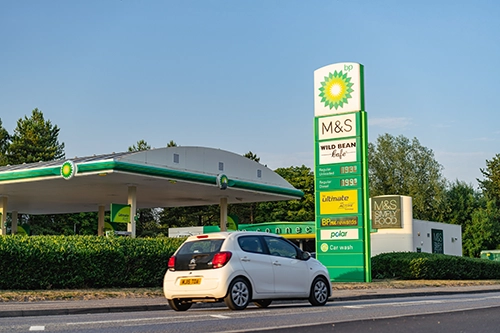
  • How to Find Fuel Prices Near Me: Check Local Petrol and Diesel Costs

    How to Find Fuel Prices Near Me: Check Local Petrol and Diesel Costs

    With petrol now averaging 140.28p per litre and diesel at 158.78p, knowing where to find the cheapest fuel in your area has never been more important. Prices can vary by up to 50p per litre between stations – that’s a potential £25 difference on a single tank.

    Here’s how to check fuel prices near you and find the best deals in your local area.

    Check Fuel Prices by Postcode

    The quickest way to find fuel prices in my area is to search by postcode. Simply enter your postcode and see every petrol station nearby, ranked by price.

    Search fuel prices by postcode →

    Each result shows:

    • Current price per litre for petrol and diesel
    • Distance from your location
    • When the price was last updated
    • Station brand and facilities

    Our data comes directly from the government’s Fuel Finder Scheme, updated within 30 minutes of any price change. You’re seeing today’s prices, not yesterday’s.

    Find Fuel Prices Near Me by Location

    Don’t know your postcode or want to search a different area? Use our location-based search to find petrol prices near me instantly.

    Find fuel prices near me →

    Allow location access on your device and we’ll show you every station within your chosen radius, sorted by price or distance – whichever matters more to you.

    View Local Fuel Prices on the Map

    Prefer a visual overview? Our fuel price map shows petrol and diesel prices across your entire area at a glance. Spot the cheap zones, identify expensive outliers, and plan your route accordingly.

    View the fuel price map →

    The map is particularly useful for:

    • Comparing prices across a wider area
    • Finding cheap fuel along your commute route
    • Spotting price clusters – supermarkets are often grouped together
    • Planning journeys around the best-value stations

    Why Local Fuel Prices Vary So Much

    You might wonder why petrol station prices differ so dramatically within the same town. Several factors drive local fuel price variation:

    Competition – Areas with multiple nearby stations tend to have lower prices as forecourts compete for customers. Rural areas with fewer options often charge more.

    Retailer type – Supermarkets like Asda, Tesco, Sainsbury’s and Morrisons typically offer the cheapest fuel, using it as a loss-leader. Branded forecourts and motorway services charge premium prices.

    Location costs – Stations with higher rent, rates, or operating costs pass these on to customers. City centre and motorway locations are particularly expensive.

    Wholesale timing – Different retailers buy fuel at different times. When wholesale prices spike, some stations raise prices immediately while others still have cheaper stock to sell through.

    Petrol Prices Today: What to Expect

    Current average UK fuel prices stand at:

    • Petrol (E10): 140.28p per litre
    • Diesel (B7): 158.78p per litre

    However, these are national averages. Actual prices at local petrol stations range from under 130p to nearly 180p per litre depending on where you fill up.

    During volatile periods like now, the gap between the cheapest and most expensive stations widens further. Checking diesel prices near me or petrol prices in my area before every fill-up is essential.

    Tips for Finding Cheap Fuel Near Me

    Check before you leave – A quick search on CheckFuelPrices takes seconds and could save you £10-25 per tank.

    Compare supermarkets – Asda, Tesco, Sainsbury’s and Morrisons are usually cheapest, but prices vary between branches. Don’t assume your nearest supermarket is the best value.

    Avoid motorway services – Motorway fuel prices are typically 15-20p per litre higher than regular forecourts. Fill up before joining the motorway.

    Consider the detour – If a station 3 miles away is 10p cheaper, that’s £5 saved on a 50-litre tank. Usually worth the extra few minutes.

    Check different fuel types – We show prices for E10 petrol, E5 super unleaded, diesel and premium diesel. Filter by the fuel you actually need.

    Check Fuel Availability Too

    With high demand at some forecourts, it’s worth checking whether stations actually have fuel before making the trip. Our crowdsourced availability reports show which stations have stock and which are running low.

    After you fill up, take 10 seconds to report what you found – it helps other drivers avoid wasted journeys.

    Search by Brand

    Prefer a specific retailer? Maybe you collect Nectar points at Esso or Clubcard points at Tesco. Browse stations by brand to find your preferred retailer at the best local price.

    Start Saving Now

    With prices at their highest in over 20 months and further rises expected, checking local fuel prices before every fill-up is one of the easiest ways to cut your motoring costs.

    Bookmark CheckFuelPrices or add it to your home screen for instant access whenever you need to fill up.

  • UK Fuel Supply at Risk If Middle East Disruption Continues

    UK Fuel Supply at Risk If Middle East Disruption Continues

    Britain could face fuel rationing within weeks if disruptions to global oil supplies continue, energy experts have warned. The Strait of Hormuz – through which around 20% of the world’s oil typically flows – remains largely closed due to the ongoing Middle East conflict.

    What This Means for UK Fuel Supplies

    The UK consumes approximately 1.4 million barrels of oil per day. Domestic production from the North Sea covers roughly half of that demand, with the remainder relying on imports.

    Nick Butler, former head of strategy at BP, told Times Radio: “At the moment, the Strait of Hormuz is almost completely closed, and we’re losing about 20 million barrels a day. That’s one-fifth of global demand. If this continues, there will be a real shortage of supply worldwide, including in the UK.”

    Shipping analysts from Lloyd’s List suggest that even with military escorts, oil flows through the strait might only recover to 8-10% of normal levels.

    Could Rationing Happen?

    Industry figures indicate the government may need to activate emergency contingency powers if shortages worsen. These powers could include:

    • Restricting the amount of fuel each driver can purchase
    • Limiting petrol station operating hours
    • Prioritising fuel deliveries to emergency services and public transport
    • Controlling distribution to protect essential services like hospitals, schools, and food delivery networks

    Butler warned that without proper preparation, the crisis could trigger panic buying within three to four weeks.

    UK’s Reduced Refining Capacity

    Professor Paul de Leeuw from the Energy Transition Institute at Robert Gordon University highlighted Britain’s vulnerability to supply shocks.

    Only four oil refineries remain operational in the UK today, down from 17 in the 1970s. This reduced capacity means Britain is more reliant on imported refined fuel, not just crude oil.

    “We are not going to run out of oil,” he said, “but we could experience a period when we need to prioritise supply to protect essential services and vulnerable communities.”

    He also noted that Britain’s energy imports – mainly from the United States and Norway – could be redirected to countries willing to pay higher prices if global competition for supply intensifies.

    What Other Countries Are Doing

    Several countries reliant on Gulf energy have already begun implementing rationing measures:

    • Bangladesh: Restricted petrol and diesel sales at forecourts
    • India: Prioritised household gas supplies over industrial use

    The UK has not yet introduced any restrictions, but contingency plans exist under existing emergency powers.

    What Drivers Should Do Now

    There is currently no shortage of fuel at UK forecourts. However, with prices already at 20-month highs and supply uncertainty ahead, drivers should:

    Don’t panic buy – Rushing to fill up creates the very shortages everyone fears. If you have half a tank, you don’t need to queue today.

    Fill up when you normally would – Stick to your usual routine. Tanker deliveries are continuing as normal.

    Shop around for prices – With price variations of up to 50p per litre between forecourts, checking CheckFuelPrices before filling up could save you £10-25 per tank.

    Check fuel availability – Use our crowdsourced availability reports to see which stations near you have fuel in stock and avoid wasted journeys.

    Drive efficiently – Make every tank go further by driving smoothly, checking tyre pressures, and cutting non-essential trips.

    The Current Picture

    As of this week, average UK fuel prices stand at:

    • Petrol (E10): 142.7p per litre
    • Diesel (B7): 163.2p per litre

    Prices have risen sharply since the conflict began on February 28, with petrol up around 8.5p and diesel up approximately 17.5p per litre. Further increases are expected while oil remains above $100 a barrel.

    Stay Informed

    We’ll continue monitoring the situation and updating prices daily. Bookmark CheckFuelPrices for the latest prices and availability reports in your area.

    If rationing measures are introduced, we’ll provide full details on how they affect drivers and where to find fuel.

  • CMA Launches Investigation Into Fuel Price Rises Amid “Price Gouging” Claims

    CMA Launches Investigation Into Fuel Price Rises Amid “Price Gouging” Claims

    The UK’s competition watchdog is investigating whether petrol stations are overcharging drivers in response to the Middle East conflict, amid accusations of “price gouging” from the Chancellor.

    The Competition and Markets Authority (CMA) has told fuel retailers they must supply revenue, costs and sales data as it accelerates its review of fuel margins – the difference between what retailers pay for fuel and what they charge customers.

    What the CMA Is Investigating

    Juliette Enser, the CMA’s executive director for markets, said: “Whilst price increases might be inevitable because of rising wholesale costs, it is important that those increases reflect genuine cost pressures.”

    She added: “We will be closely scrutinising and reporting on what’s happening with fuel prices and call out any concerning behaviour.”

    The watchdog will examine how quickly pump prices change relative to wholesale costs, and whether there is evidence of “rocket and feather pricing” – where prices rise rapidly in response to cost increases but fall more slowly than necessary as retailers look to boost profits.

    Chancellor Accuses Retailers of “Price Gouging”

    Chancellor Rachel Reeves has accused petrol retailers of exploiting the crisis, pointing to huge price variations between forecourts.

    “Yesterday some petrol retailers were charging almost 180p a litre while others charged less than 130p a litre,” she said, vowing to meet companies this month “to get prices down at the pumps”.

    That 50p per litre gap means some drivers are paying up to £25 more per tank than others – simply by filling up at the wrong station.

    Where Prices Stand Now

    According to the our latest Fuel Finder data, average UK fuel prices have hit their highest levels in more than 20 months:

    • Petrol: 140.2p per litre
    • Diesel: 158.9p per litre

    Prices have increased by between 6p and 13p per litre since February 28, when the US and Israel launched strikes on Iran. The cost of filling a 55-litre family diesel car has jumped by as much as £6.67 in just over a week.

    Government figures published this week show petrol at 135.67p and diesel at 149.01p – with petrol up 3.5p in a single week and diesel surging 6.9p.

    A History of High Margins

    This isn’t the first time fuel retailers have faced scrutiny. In December, the CMA warned that fuel margins remained persistently high compared to historic levels – and that this could not be explained by retailers’ operating costs.

    Prices at the pump increased rapidly following Russia’s invasion of Ukraine in 2022 and have remained above pre-2022 levels ever since, even as wholesale costs fell.

    Liberal Democrat Treasury spokesperson Daisy Cooper said: “People have already been paying through the nose to fill up their car, as forecourts have jacked up their profit margins over a period of months.”

    She added: “Last time oil prices went up, petrol stations raised their profits even more, so people are now worried that this could happen yet again, at an even greater scale. Fuel giants should not be allowed to treat families already struggling with the cost of living like cash cows.”

    Why Shopping Around Has Never Been More Important

    The Chancellor’s revelation that prices range from under 130p to nearly 180p per litre shows just how much variation exists between forecourts. During volatile periods like this, the gap between the cheapest and most expensive stations widens dramatically.

    A quick price check before filling up could save you £10-25 per tank – far more than at any point in recent memory.

    Use CheckFuelPrices to compare prices at stations near you. Our data comes directly from the government’s Fuel Finder Scheme, updated within 30 minutes of any price change – so you’re seeing current prices, not yesterday’s figures.

    What Happens Next?

    The CMA will publish its findings once it has analysed retailer data. Meanwhile, the Chancellor has committed to meeting fuel companies this month to discuss pricing.

    Oil prices remain above $100 a barrel with the Middle East conflict showing no signs of resolution. Experts have warned that petrol could reach 150p and diesel 160p or higher if the situation continues.

    For drivers, the message is clear: expect further price rises, shop around for every fill-up, and consider whether every journey is essential.

    Report Price Discrepancies

    Spotted a forecourt charging significantly more than competitors nearby? You can help by reporting prices on CheckFuelPrices. The more drivers share information, the harder it becomes for retailers to charge excessive premiums without being noticed.

    Transparency is the best defence against price gouging – and every report helps.

  • Fuel Prices Surge as Middle East Conflict Enters Second Week

    Fuel Prices Surge as Middle East Conflict Enters Second Week

    Current Prices: Petrol 137.9p/L | Diesel 152.5p/L

    UK fuel prices have climbed sharply over the past week as the conflict between the US, Israel and Iran continues to disrupt global oil markets. Petrol is up 2.8% this week while diesel has jumped 5.4% – the steepest weekly increases we’ve seen in years.

    Oil prices have now soared above $100 a barrel for the first time since 2022, with no immediate signs of the conflict easing.

    How Much Have Prices Risen?

    Here’s where average UK prices stand as of today:

    • Petrol (E10): 137.9p per litre – up 2.8% this week
    • Super Unleaded (E5): 155.5p per litre – up 2.6% this week
    • Diesel (B7): 152.5p per litre – up 5.4% this week
    • Super Diesel (SDV): 171.7p per litre – up 4.6% this week

    Since the conflict began on February 28, petrol has risen by around 5p per litre while diesel is up approximately 9p. A 50-litre tank of petrol now costs £68.95 – roughly £2.50 more than a fortnight ago. Diesel drivers are paying £76.25 per fill, up around £4.50.

    How High Could Prices Go?

    Analysis by the Energy and Climate Intelligence Unit shows the historic relationship between oil and pump prices:

    • Oil at $100/barrel: Petrol around 150p per litre
    • Oil at $120/barrel: Petrol around 170p per litre

    RAC head of policy Simon Williams warned: “Average petrol and diesel prices have rocketed in the last week and are unfortunately likely to keep on rising, so the situation for UK drivers is looking increasingly bleak.”

    He added: “Unleaded is almost certainly going to reach an average of 140p in the next week or so, while diesel looks highly likely to climb to at least 160p a litre.”

    At 160p per litre, a 50-litre tank of diesel would cost £80 – nearly £8 more than today.

    Drivers Urged to Cut Non-Essential Journeys

    AA president Edmund King has advised motorists to reconsider unnecessary trips: “Our suggestion is that drivers should not change their refuelling habits but can consider cutting out some non-essential journeys and changing their driving style to conserve fuel.”

    He added: “The longer this conflict goes on, the more effect it will have on the cost of oil. Any time Brent Crude passes 100 dollars per barrel raises concern across the markets, for the haulage industry and drivers.”

    However, he stressed that price rises should be gradual: “There will be gradual increases in pump prices, but this shouldn’t happen overnight as fuel has been purchased at previous prices.”

    How to Save Fuel and Cut Costs

    With prices climbing, making each tank go further has never been more important. Here’s how:

    Drive smoothly – Avoid harsh acceleration and braking. Anticipate traffic flow and maintain steady speeds. Aggressive driving can increase fuel consumption by up to 30%.

    Slow down – Driving at 70mph uses up to 9% more fuel than 60mph, and up to 15% more than 50mph. On longer journeys, the savings add up.

    Check tyre pressures – Under-inflated tyres increase rolling resistance and fuel consumption. Check them at least monthly and before long journeys.

    Remove excess weight – Clear out unnecessary items from your boot. Every extra 50kg increases fuel consumption by around 2%.

    Turn off the engine when stationary – If you’re stopped for more than a minute, switch off. Modern cars don’t need to idle to “warm up”.

    Combine trips – A warm engine is more efficient than a cold one. Plan errands to do multiple stops in one journey rather than several separate trips.

    Use air conditioning sparingly – Air con can increase fuel consumption by up to 10% in stop-start urban driving.

    Shop Around – Price Gaps Are Widening

    During volatile periods, the gap between the cheapest and most expensive stations widens significantly. Simon Williams advised: “We encourage drivers to continue filling up as normal but to shop around for the best prices.”

    The difference between a supermarket forecourt and a premium branded station could now be 15-20p per litre or more. On a 50-litre tank, that’s £7.50 to £10 – well worth a quick check before filling up.

    Use CheckFuelPrices to compare prices at stations near you. With prices changing rapidly, checking before every fill-up could save you significant money over the coming weeks.

    The Diesel Premium Hits Record Levels

    The gap between petrol and diesel has stretched dramatically. Diesel now costs 14.6p more per litre than petrol – up from around 10p just a week ago. Diesel drivers are paying £7.30 more per 50-litre tank than petrol users.

    This widening spread reflects diesel’s greater exposure to global supply disruptions, particularly through the Strait of Hormuz where a significant portion of the world’s oil shipments have been affected.

    What Happens Next?

    The trajectory of fuel prices depends entirely on how the conflict develops. If oil remains above $100 per barrel for an extended period, expect petrol to reach 150p and diesel to approach 160p or higher.

    Edmund King noted: “The longer this conflict goes on, the more effect it will have on the cost of oil.”

    For now, drivers should expect continued gradual increases at the pumps. The best defence is to drive efficiently, shop around for prices, and avoid non-essential journeys where practical.

    Check Prices Before You Fill Up

    With prices changing daily, checking before every fill-up is essential. Visit CheckFuelPrices to find the cheapest fuel near you – and report availability to help other drivers avoid empty pumps during this volatile period.

  • Check Fuel Availability at Stations Near Me

    Check Fuel Availability at Stations Near Me

    With queues forming at petrol stations across the UK and some forecourts reporting temporary outages, we’ve launched a new crowdsourced feature to help drivers find stations that actually have fuel in stock.

    You can now report and check real-time fuel availability at any station on CheckFuelPrices – helping fellow drivers avoid wasted journeys to pumps that have run dry.

    How It Works

    When you visit a petrol station, you can now report:

    Fuel availability – Is petrol available? Diesel? Both? Neither?

    These reports appear instantly on our fuel price map and station listings, so other drivers can see at a glance which stations have fuel and which to avoid.

    Why We Built This

    Government fuel price data tells you what stations are charging – but not whether they actually have fuel to sell. During periods of high demand, that’s the information drivers really need.

    Our crowdsourced availability reports solve that problem. Before you set off, check which petrol stations near you have fuel in stock right now.

    Finding Petrol Stations With Fuel Near You

    If you’re searching for a petrol station with fuel near you, here’s how to use the feature:

    1. Visit CheckFuelPrices.co.uk or open the app from your home screen

    2. Enter your postcode or allow location access

    3. View nearby stations – those with recent availability reports will show stock status

    4. Check the timestamp to see how recent the report is

    5. After you fill up, submit your own report to help others

    Is There a Petrol Shortage?

    No. The UK has no fuel shortage. National supplies remain stable and tanker deliveries are continuing as normal.

    What we’re seeing is localised demand spikes – when lots of drivers try to fill up at once, individual stations can temporarily run dry before their next delivery arrives. This is a logistics issue, not a supply crisis.

    The Government has confirmed there are no reported impacts to UK fuel supply. AA president Edmund King has advised drivers: “There is no need to break your refuelling routine.”

    However, if you do need fuel and want to avoid queues or empty pumps, our availability checker helps you find stations with confirmed stock.

    Petrol Station Stock Checker: Report What You See

    The more drivers who contribute, the more useful this tool becomes. If you’ve just filled up – or found a station that’s run dry – take 10 seconds to submit a report.

    You’re not just helping yourself next time. You’re helping NHS workers get to shifts, parents doing school runs, and delivery drivers keeping businesses running.

    Every report helps build a real-time picture of fuel availability across the UK.

    Which Petrol Stations Have Fuel Right Now?

    Availability varies by area and changes throughout the day. Supermarket forecourts like Asda, Tesco, Sainsbury’s and Morrisons often see higher demand due to competitive pricing, meaning they can run dry faster during busy periods.

    Lesser-known independent stations and branded forecourts in quieter areas may have shorter queues and better availability. Our fuel map shows all options near you, not just the big names.

    Use the availability reports to find stations that have been confirmed in stock recently, and check queue reports to avoid long waits.

    Tips for Finding Fuel During High Demand

    Check before you travel – Don’t waste fuel driving to empty stations. Use our availability checker first.

    Try off-peak times – Early morning or late evening often has shorter queues and better stock levels after overnight deliveries.

    Look beyond supermarkets – Everyone heads for Asda and Tesco. Independent stations may have fuel when supermarkets don’t.

    Expand your search radius – If stations near you are empty, check availability 5-10 miles out. A short drive could save hours of queuing.

    Don’t fill up unless you need to – If you have half a tank, you probably don’t need to queue today. Panic buying creates the problem it fears.

    Fuel Availability Near Me: Stay Updated

    Bookmark CheckFuelPrices.co.uk or add it to your home screen for instant access to fuel availability reports in your area.

    We’re updating station data constantly as drivers submit new reports. During periods of high demand, check back regularly – availability can change within hours as deliveries arrive and stock sells through.

    Help Your Community

    Seen a queue stretching down the road? Found a station with no wait and plenty of fuel? Spotted pumps bagged off with “no fuel” signs?

    Report it. It takes seconds and helps thousands of other drivers make better decisions.

    Together, we can take the guesswork out of finding fuel – and help everyone avoid unnecessary stress, wasted journeys, and empty tanks.

    Check fuel availability near you now →